
From Wikinews, the free news source you can write!
This article is waiting for review! This article requires pre-publication review by an uninvolved reviewer (someone not substantially involved in writing the article). There are currently 4 articles in the review queue. If the article is accepted, it will be published; If declined, feedback will be posted on the talk page. You may continue improving the article while it awaits review. While waiting, how you can help: Self-check your article: Help others get published: Instructions for Reviewers: Only qualified reviewers may perform reviews and publish articles. To request reviewer rights, apply here. Review checklist: |
This article is waiting for review! This article requires pre-publication review by an uninvolved reviewer (someone not substantially involved in writing the article). There are currently 4 articles in the review queue. If the article is accepted, it will be published; If declined, feedback will be posted on the talk page. You may continue improving the article while it awaits review. While waiting, how you can help: Self-check your article: Help others get published: Instructions for Reviewers: Only qualified reviewers may perform reviews and publish articles. To request reviewer rights, apply here. Review checklist: |
Sunday, March 8, 2026
73.4% of Switzerland citizens voted yes in a national referendum to adding the right to use cash to the Swiss Constitution. On Sunday evening, Swiss Federal Council member Karin Keller-Sutter stated the results of the referendum at a press conference.
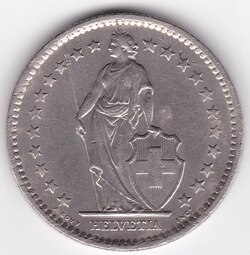
In the referendum, the citizens were presented with three questions, one was to vote yes or no to a popular cash preserving proposal by Swiss Freedom Movement (SFM); another was to vote yes or no to a counter-proposal from the government, which was reportedly clearer from legal perspective; and to specify their preference if both proposals passed. Unlike the SFM proposal, the government counterproposal did not require Swiss National Bank to provide cash in ‘sufficient quantities’, only to ‘guarantee cash supply’ to other banks in the country, meaning the government would not be required to regulate banks to ensure that branches and ATMs were widely available. While the government proposal passed, the SFM proposal didn’t pass, with only 46% supporting the initiative.
Brett Scott, an activist, commented that cash may be easier to use for some of the people with visual impairments and disabilities. Also, Nadine Frei, a sociologist, added that some people find it easier to not overspend with cash, compared with digital transactions. Swissinfo, a local news outlet, mentioned some people did not trust digital systems and were concerned about surveillance. Other reports mentioned that using cash does not involve paying transaction fees to a bank or a payment gateway.
Market Screener noted a Swiss citizen holds US$10,700 in physical cash per person on average, substantially more than in other countries.
Hungary, Slovakia and Slovenia had already included the right to use cash in their constitutions. The Swiss National Bank had previously published data in 2024 showing 30% of transactions used cash and 70% of transactions did not, at that time.
- Benjamin von Wyl. Cash in the constitution: a Swiss decision on an international issue — SWI swissinfo.ch, March 8, 2026
- Vorlage Nr. 6822 Zwischenergebnis — Swiss National Bank, March 8, 2026
- Swiss vote places right to use cash in country’s constitution — POLITICO, March 8, 2026
- Acquiremedia. Switzerland votes on fate of cash in constitution — www.marketscreener.com, March 7, 2026
- Switzerland’s voters are about to put cash in the constitution — The Economic Times, March 6, 2026