
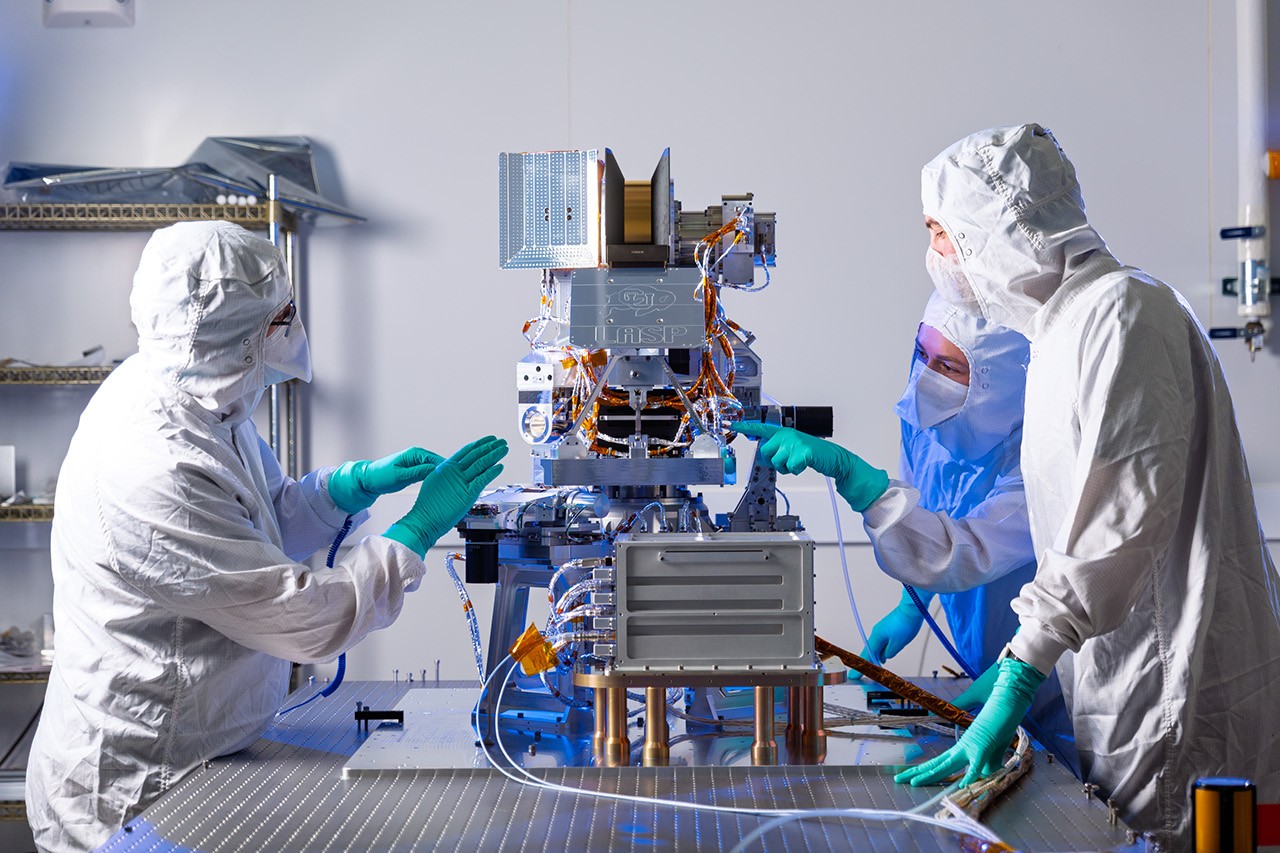
NASA’s Libera instrument, which is designed to maintain the global data record of Earth’s radiation budget, has successfully completed comprehensive environmental testing. This critical milestone included thermal vacuum tests that simulate the expected space temperature and environments that Libera will experience during its mission. The Libera instrument will fly on Joint Polar Satellite System-4 (JPSS-4), the next satellite in the series, as part of a collaboration between NASA and the National Oceanic and Atmospheric Administration (NOAA). The satellite, targeted for launch in 2027, will be named NOAA-22 once in orbit.
The University of Colorado Boulder’s Laboratory for Atmospheric and Space Physics (LASP) developed and built the Libera instrument after it was selected as the first Earth Venture Continuity mission – a NASA program that focuses on innovative, low-cost ways to maintain important Earth science measurements as older missions come to an end. Libera will continue the data record of Earth’s radiation budget, following the series of Clouds and the Earth’s Radiant Energy System (CERES) instruments that flew on the Tropical Rainfall Measuring Mission in 1997 and continued on the Terra, Aqua, Suomi National Polar-orbiting Partnership, and NOAA-20 satellites. Libera is named for the daughter of Ceres in Roman mythology, a nod to its predecessors.
NASA has been monitoring the flow of radiant energy in the Earth-atmosphere system for over a half century. This energy drives the motions of the atmosphere and oceans, fuels photosynthesis in plants, forms the protective ozone layer, and sustains all life on Earth. Understanding these flows informs weather forecasting and agricultural planning and prediction among many other applications. It enables an accurate evaluation of Earth system trends for informed strategic planning and risk assessments by the U.S. government and commercial industries.
Libera will be the fifth and final instrument delivered to Northrop Grumman in Gilbert, Arizona, for installation onto the JPSS-4 satellite. The other instruments onboard JPSS-4 are the Visible Infrared Imaging Radiometer Suite, the Cross-track Infrared Sounder, the Advanced Technology Microwave Sounder, and the Ozone Mapping Profiler Suite.
NASA’s Earth System Science Pathfinder Program Office, based at NASA’s Langley Research Center in Hampton, Virginia, manages the Libera mission. The JPSS-4 satellite is managed through a collaboration between NOAA, and NASA’s Goddard Spaceflight Center in Greenbelt, Maryland.
To learn more about Libera, visit: