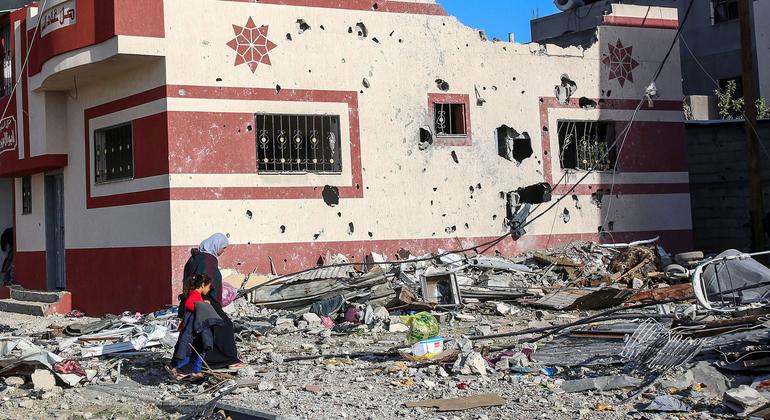

Mr. Al-Assi lives with his family in a tent made of cloth and plastic sheeting next to the rubble of their home in the Al-Zarqa neighbourhood in the centre of Gaza City, where they used to live “happily” and eat good food, including special Ramadan sweets like Qatayef.
“Everything has changed now,” he told UN News, describing the grim landscape left behind following two years of Israeli attacks.
“We have been deprived of all these things. Today, I see goods in stores, and I turn my face away from them because I do not have the money to buy them. I am a man who suffers from high blood pressure and diabetes, and I cannot walk. Those in the tents must be helped.”
Walid Al-Assi’s family lives in a tent set up beside their destroyed home in the Al-Zarqa neighbourhood in central Gaza City..
‘We are living in a tragedy’
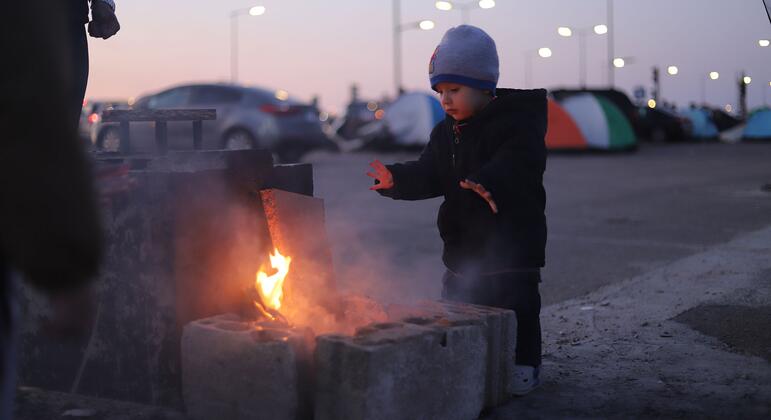
In another displacement tent, Amal Al-Samri and her husband are trying to create an atmosphere, even if only symbolically, for the month of Ramadan. They have been busy arranging the tent and preparing for the holy month, while a smile never left Ms. Al-Samri’s tired face, and their three children wore clothes that looked new in celebration of the arrival of the month.
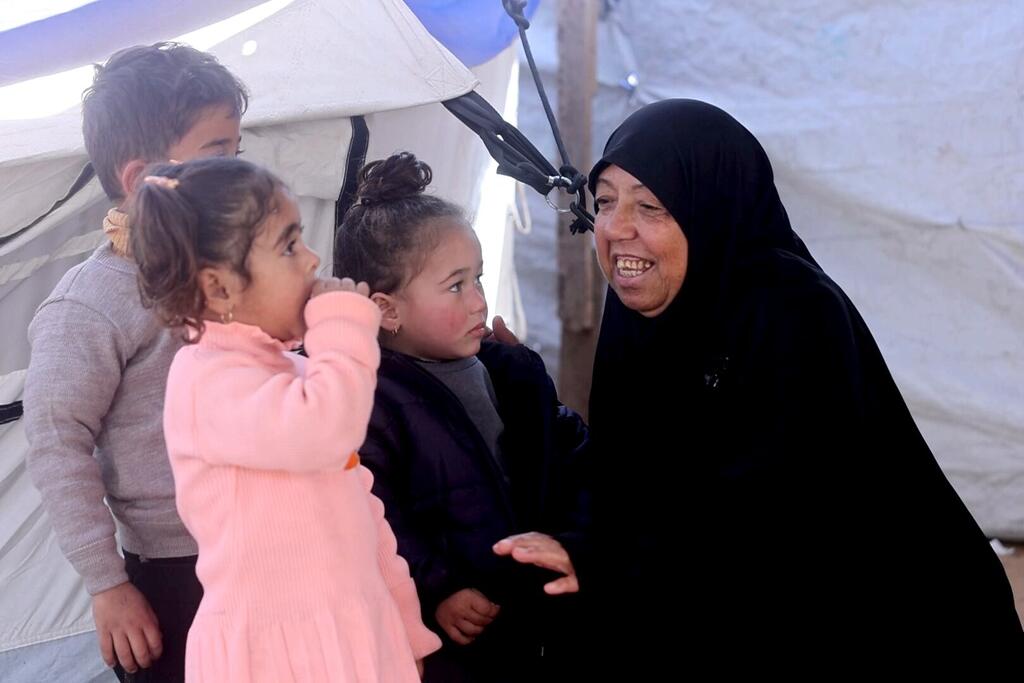
Amal Al-Samri and her children sit outside their tent, pitched beside their destroyed home in the same neighbourhood.
Before the war, she said, “our life was beautiful.”
She said she would visit relatives, go see her family and brothers, shop at the market for the house and create a Ramadan atmosphere, complete with hanging lights and decorations.
“Today, there is nothing,” she said.
“We are living in a tragedy. There is no electricity or water. We were displaced from our homes from one place to another, and in one place, the sea water flooded us and swept away our tents.”
High prices and shortages
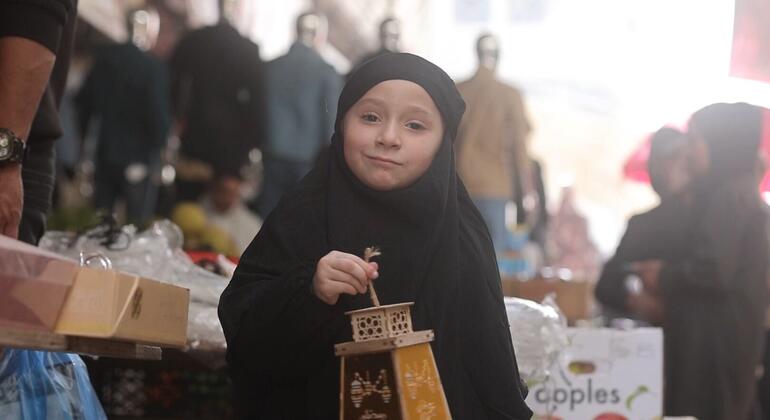
Despite the circumstances, challenges, continued suffering, shortages of supplies and the signs of destruction that left deep scars in the sector, the atmosphere of the holy month of Ramadan and its distinctive goods found their way to the historic Zawiya market in Gaza City.
Shops and vendors’ stalls put up lanterns of different sizes and signs advertising their goods and welcoming the holy month.
Some families were able to buy lanterns for their children despite the high prices.
Prices double for Ramadan lanterns
But, many pass through the market without buying anything as they do not have enough to buy in light of the high prices and the scarcity of goods, explained Luay Al-Jamasi, the owner of a shop selling Ramadan decorations.
“Many people have been deprived of Ramadan decorations because they do not have electricity,” he said. “The price of Ramadan decorations has risen significantly because no more of them have entered the sector in the past period.”
Holding one of the lanterns, he pointed out that “the price of this lantern used to be 30 shekels, but now it has reached 60 shekels. The price has doubled because of the lack of goods entering the country.”
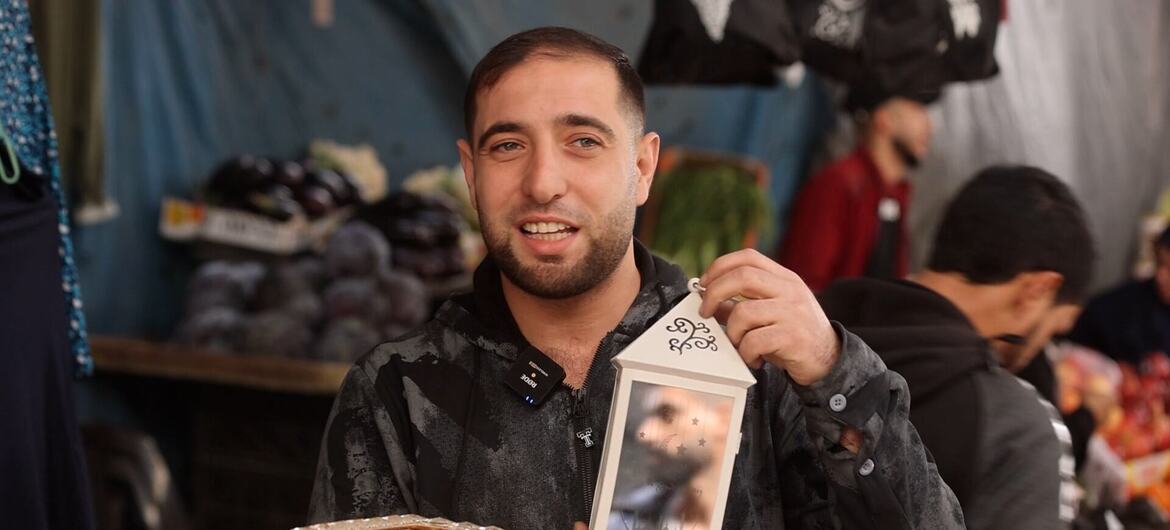
Louay Al-Jamasi, owner of a shop in Gaza City selling Ramadan decorations.
‘We’ve been through some difficult times’
However, there are those who are determined to celebrate in their own way and show solidarity with those who celebrate the month, including Maher Tarzi, a Christian Palestinian citizen, who was strolling through the Zawiya market.
In a sweet voice, he sang one of the songs associated with the month of Ramadan, whose lyrics say: “sweet and happy nights have arrived, nights that are coming and nights that are going, in which the manifestation is always present, and its light shines from the heights.”
“People want to be happy,” Mr Tarzi said. “We’ve been through some tough times, and it’s good that we’re still alive.”
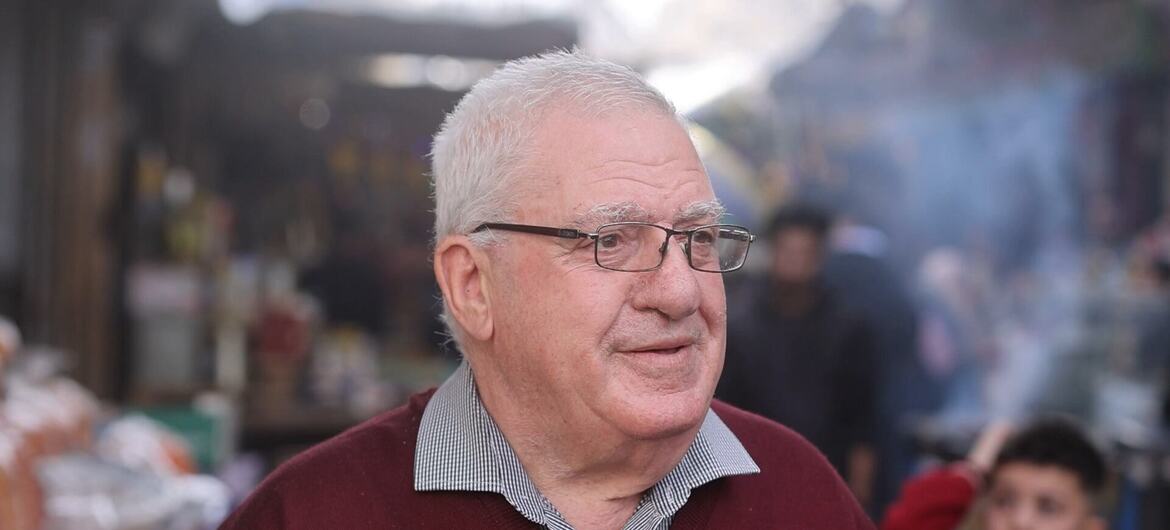
Maher Tarzi visited the market in Gaza City.
‘How did we survive all this?’
“People look around and wonder, how did we survive all this?” Mr. Tarzi continued. “Then they resume their lives and come to the markets. But, things are not the same now as they were before in terms of purchasing power.”
At night, some areas of Gaza City are illuminated by available lanterns and lamps in celebration of the arrival of the holy month of Ramadan, despite the harsh conditions that many Gaza residents are still living in, most of whom are still displaced.
The UN Office for the Coordination of Humanitarian Affairs (OCHA) reported that, according to estimates, at least two thirds of the population (1.4 million out of 2.1 million) are living in about 1,000 of the sites to which they have been displaced, in overcrowded places and in tents that offer little privacy and protection.