
In an exclusive interview with UN News, Special Representative for Children and Armed Conflict, Vanessa Frazier, reflected on the alarming rise in grave violations against children and the urgent need to safeguard their future.
“The recruitment and use of children is still one of the most widespread and devastating violations we face. In 2024 alone, over 7,400 children were recruited or used by armed forces and armed groups, and those are only the verified cases,” Ms. Frazier told us, just ahead of Thursday’s international day against the use of child soldiers.
“Over the last 30 years, we have separated over 220,000 children from armed gangs,” she emphasised.
Growing crisis across conflicts
Her office monitors approximately 26 conflict situations around the world, and the numbers tell a grim story.
“The violations are most prevalent in the Democratic Republic of the Congo, Nigeria, Somalia, Syria, and Myanmar,” Ms. Frazier explained.
“But we’re also seeing worrying trends in Sudan, where children are specifically targeted because they are seen as useful – as border guards, as workers, even as fighters.”
Behind those statistics, she stressed, are young lives forever altered. “Each number in our report represents a child whose innocence has been interrupted,” she said.
From abduction to reintegration
Beyond documenting violations, Ms. Frazier’s office engages directly with combatants to negotiate the release of children and their safe return home.
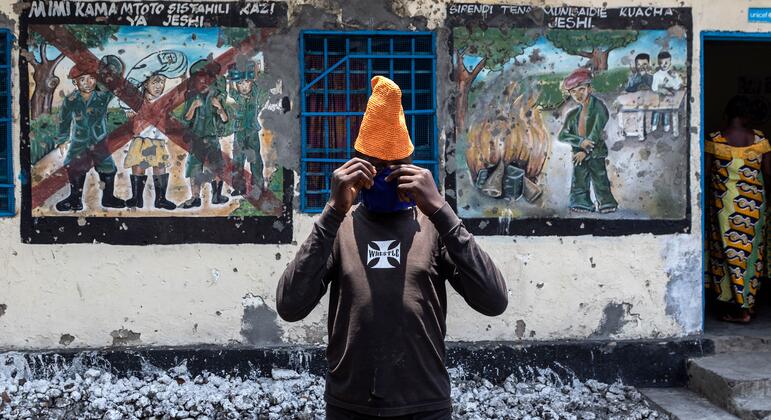
“One of the strengths of our mandate is that we can negotiate directly with armed groups for the handover of children,” she explained. “Once separated, [children’s agency] UNICEF and our partners work on their reintegration, ensuring they receive psychosocial support, access to education, and the chance to reclaim their childhood.”
An eleven-year-old boy sits in the dormitory of a reintegration centre for recently demobilized child soldiers in Goma, DR Congo. (file)
But reintegration is often fraught with stigma. “Girls who return may be shunned by their communities, especially those who come back with children,” she said. “For societal reasons, some girls cannot be fully reintegrated are considered damaged goods.”
Prevention and accountability
For Ms. Frazier, prevention is the ultimate goal.
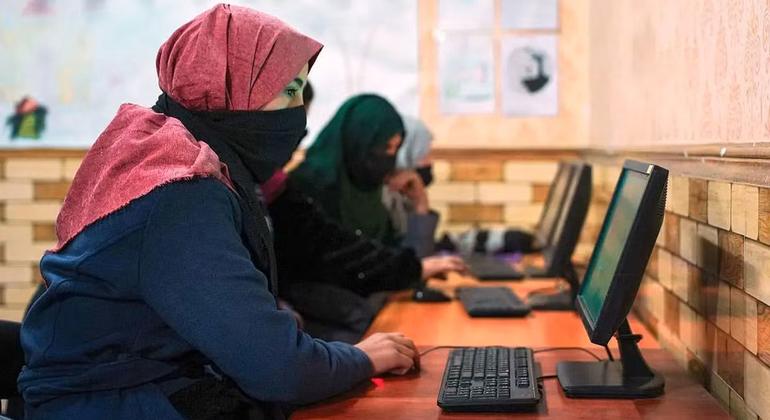
“Prevention is better than cure,” she told us. “You know, this is why we really do advocate that even in times of war and armed conflict, children must remain in school. When they are out of school, they become very vulnerable to recruitment – whether forced or not.”
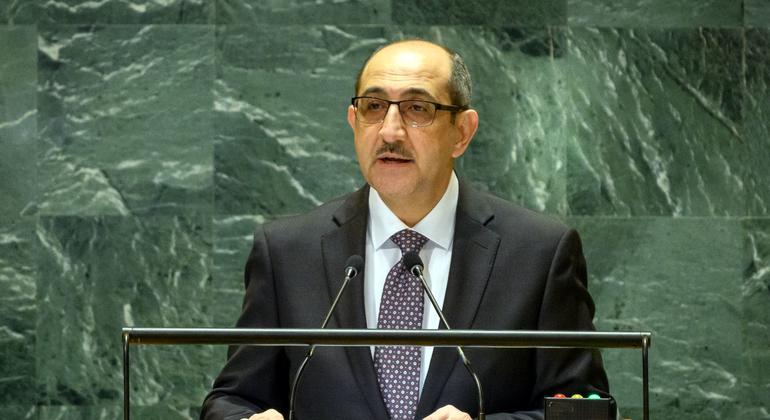
Accountability, too, plays a key role. The Special Representative – who previously served as Malta’s Ambassador to the UN, including an influential period on the Security Council – pointed to recent prosecutions before national courts and the International Criminal Court (ICC) as vital deterrents.
“One of the greatest tools of deterrence is justice and accountability,” she highlighted”. “When warlords or armed group leaders are prosecuted and sentenced for recruiting children – including in national courts and at least three cases before the International Criminal Court – it sends a powerful message. Justice and accountability act as strong deterrents, showing armed groups that this crime carries real consequences.”
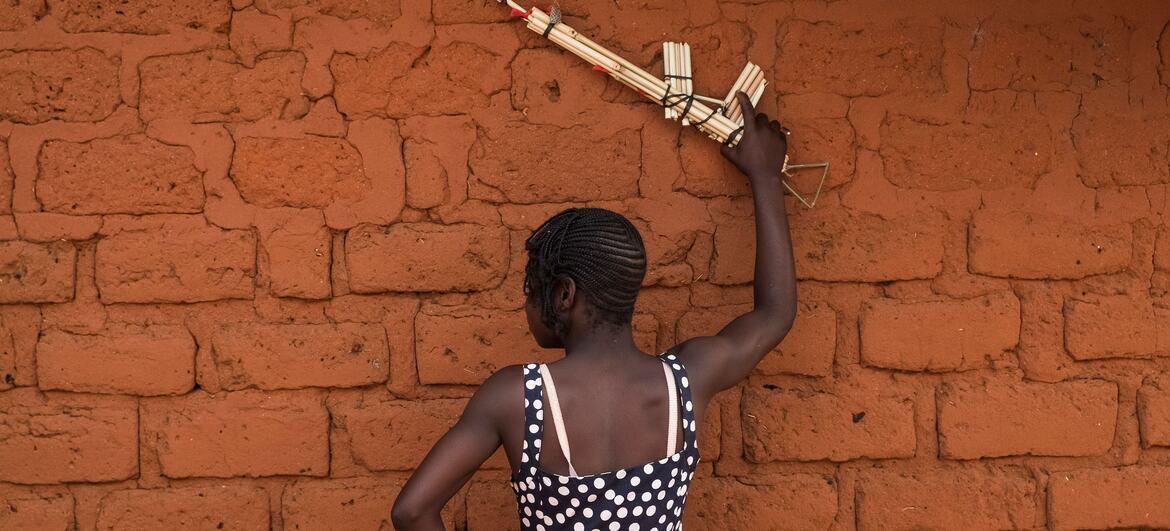
A 13-year-old girl formerly associated with an armed group in the Central African Republic holds a mock weapon.
Her conviction is rooted in field experience – from meeting survivors of Boko Haram’s abductions in Nigeria to listening to women once enslaved by the Lord’s Resistance Army in Uganda.
“You hear about a 13-year-old girl holding her baby, and you realise how deeply conflict steals childhood,” she said.
“When you hear these stories, you realise those numbers in our reports are individuals – children who were supposed to have their whole future ahead of them,” she said.
Epitome of innocence
Ms. Frazier spoke with emotion about why she is so committed to this cause.
“Children are the epitome of innocence,” she said. “They have not taken sides in any war, yet their innocence and childhood have both been interrupted. Children should never be treated as collateral of war.”
Children are the epitome of innocence
She added that the path to lasting peace begins with protecting and empowering those same children.
“The sustainability of peace depends on children’s right to take it forward. When they are brought back from conflict, they must have access to education and the chance to be fully integrated into society — to aspire to become doctors, nurses, lawyers, politicians, engineers — and that can only be achieved through education.”
Messages of hope
The Special Representative outlined her campaign Prove It Matters, which invites children affected by war to send messages to leaders, folded into origami doves, the universal symbol of peace.
“One child wrote to me, ‘I still have hope for a peaceful world. Never again a girl being a wife of a guerrilla fighter. Never again being part of armed groups. Let’s save childhoods and families too.’ It’s such an innocent plea, but it is what we are about,” she said.
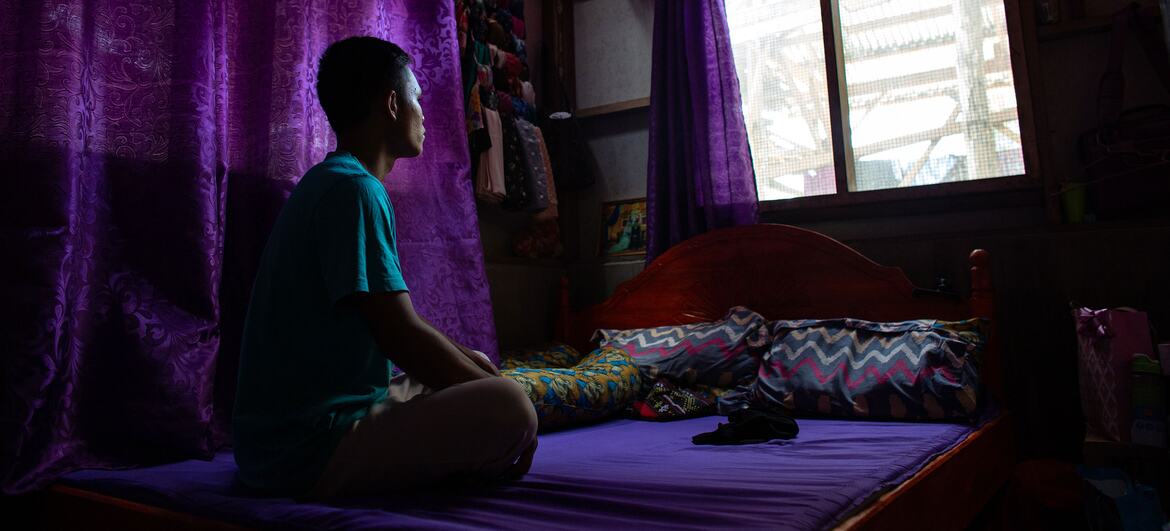
A young man and former child soldier in Sultan Kudarat, Philippines, plans to return to school.
As the conversation ended, Ms. Frazier reiterated her conviction that education, justice and hope remain the pillars of peace.
“Children should be able to continue with their innocence even during times of conflict,” she said. “It is about ensuring a sustainable and peaceful future for the world.”