
February 13 marks World Radio Day, an occasion that commemorates the 80th anniversary of UN Radio’s inception. Stories gathered from around the globe highlight radio’s unwavering reliability in areas affected by conflict, natural disasters, or significant digital divides. In these challenging environments, radio serves as a vital source of information, reassurance, and connection, reaching places where other communication channels fail.
From UN Radio to UN News: A Legacy of Information
The enduring significance of radio is intrinsically linked to the United Nations’ history. Eighty years ago, following the Second World War, UN Radio commenced broadcasting from New York, delivering news and features in five languages and transmitting proceedings of the Security Council.
Over the years, renowned personalities like Edward R. Murrow, Marlon Brando, Audrey Hepburn, and Frank Sinatra narrated global events, while historic speeches from leaders such as John F. Kennedy, Mikhail Gorbachev, Nelson Mandela, Fidel Castro, and Pope John Paul II reached audiences worldwide. This rich legacy evolved into UN News, a multimedia platform now operating in 10 languages and reaching over 170 countries with breaking news, interviews, and in-depth coverage of global challenges.
Despite technological advancements, the core principle of providing dependable information through audio formats remains, bridging past and present.
Rebuilding Radio Broadcasting in Gaza Amidst Conflict
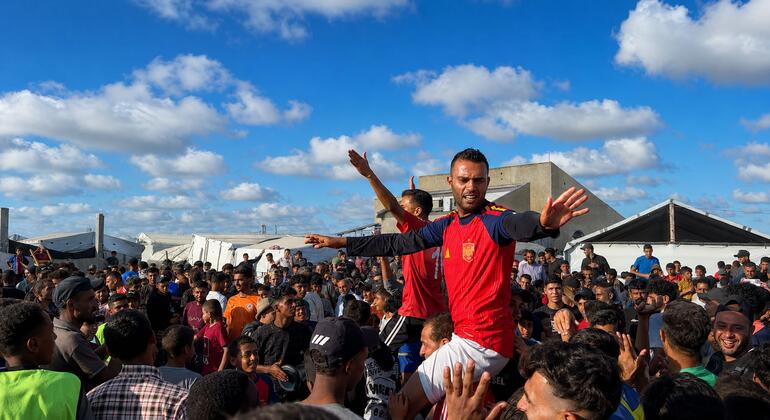
The mission of radio is perhaps most critical in conflict zones. In Gaza, prior to October 7, 2023, 23 local radio stations were operational. The ongoing war has led to the destruction of all these stations. Rami Al‑Sharafi, director of Zaman FM, is leading a determined effort to restore broadcasting amidst widespread devastation. Zaman FM has resumed transmissions, becoming the sole FM station broadcasting from within the Gaza Strip following extensive destruction. This resurgence is vital for disseminating crucial information in a region facing health crises, educational system collapse, and disrupted public services.
Radio as a Crucial Tool for Peacekeeping and Social Cohesion
In other conflict-affected regions, radio acts as a stabilizing force. Radio Okapi, established in 2002 as part of the UN peacekeeping mission MONUSCO in the Democratic Republic of Congo, has become a trusted voice. Broadcasting in French and four national languages, it provides reliable information in areas plagued by violence and displacement. Listeners attest to its key role in promoting peace through impartial reporting and serving as a platform for victims to voice their suffering to authorities. The station actively combats hate speech and fosters social cohesion through programs like ‘Inter-Congolese Dialogue’.
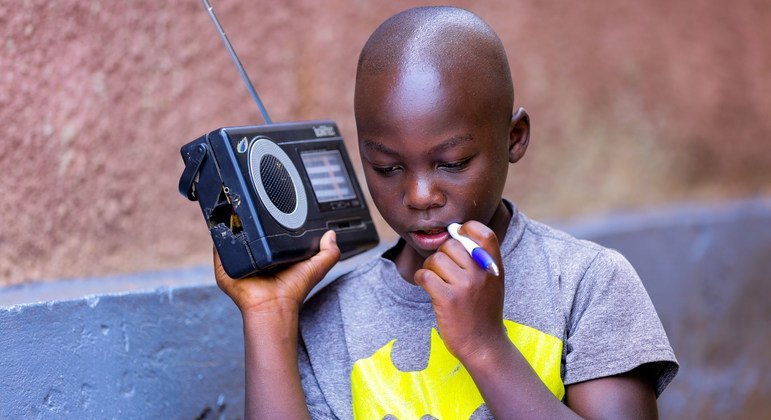
For refugees like Bahati Yohane, Radio Okapi was a lifeline during escalating violence in the DRC, providing essential security information. In the Central African Republic, the UN mission MINUSCA supports Guira FM and local broadcasters to ensure access to trusted information in remote and insecure areas. Initiatives like distributing radios have improved information flow and reduced rumors. This continues a tradition that includes the UN News Kiswahili program ‘Mwangaza wa Umoja wa Mataifa,’ which offered hope and practical solutions from the 1970s to the 1990s. UNESCO also supports radio stations in fragile environments, such as 10 stations in Afghanistan providing essential guidance on basic services to millions, including women and girls.
Lifesaving Information and Amateur Radio Heroes
During climate-driven emergencies, radio often remains the last dependable link when phone lines and internet fail. In Mexico, amateur radio operators were hailed as national heroes after the 1985 earthquake when communication systems collapsed. The Mexican Federation of Radio Amateurs now coordinates the National Emergency Network, transmitting vital information during hurricanes, floods, and earthquakes. During Hurricane Otis in 2023, operators improvised communication systems, providing critical reports on affected areas and accessibility.
An Inclusive Platform: Radio Udaan and AI’s Role
Radio also champions accessibility and inclusion. Radio Udaan, India’s first online station run by visually impaired presenters since 2014, reaches listeners globally, addressing disability rights, education, and social inclusion while challenging stereotypes. Founder Danish Mahajan emphasizes the value of UN News content for the visually impaired community. He sees Artificial Intelligence (AI) as a transformative technology for expanding accessibility, though he notes that human speech’s emotional nuances are irreplaceable.
The Enduring Signal: Radio’s Power in a Digital Age
While AI is rapidly changing the audio landscape, particularly in China where podcast audiences exceed 150 million, the human element in communication remains crucial. Professor Sun Shaojing of Fudan University highlights that AI-generated voices, while efficient, lack the emotional depth and empathy required for reporting on human suffering. The imperfections of human speech, he argues, give voice its soul.
Beyond Earth, radio remains fundamental to space exploration and communication. Radio waves are the unseen bridge for satellite communications, Earth monitoring, and navigation. As space exploration intensifies, the International Telecommunication Union (ITU) works to protect essential frequency bands for tracking climate change impacts. Expanding lunar plans by major space powers could threaten the Moon’s protected silent zone, essential for astronomical study. The ITU will establish a regulatory framework for radio spectrum management on the Moon, balancing communication needs with scientific preservation. Future space industries like tourism, manufacturing, and data centers will also rely heavily on radio communication.
From conflict zones and disaster response to accessibility initiatives, digital innovation, and outer space, radio continues to demonstrate its remarkable strength. In a world saturated with images and rapidly advancing technology, these invisible waves serve as a powerful reminder that the simplest forms of communication often possess the greatest capacity to inform, protect, and unite.