

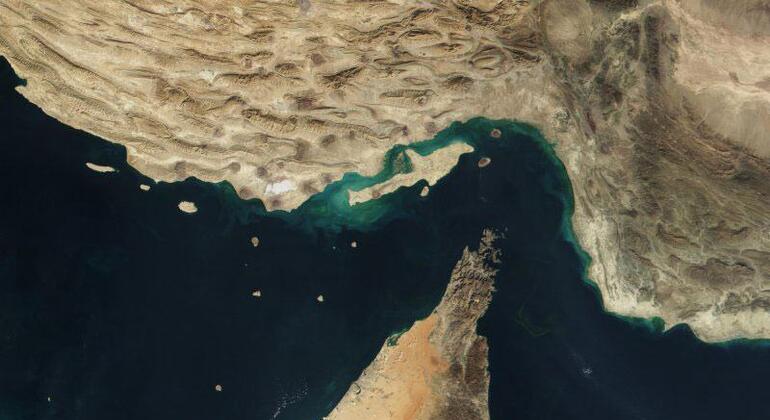
Awa Dabo, Deputy Chair of the UN Human Rights Commission, speaking at the Human Rights Council in Geneva, highlighted that disruptions to maritime traffic in the vital Gulf strait and the US naval blockade on ships using Iranian ports have destabilized the global energy supply chain. She emphasized that this crisis has severely impacted aviation, restricted humanitarian aid flow, and escalated into a broader crisis affecting millions in the region and beyond, with a looming fertilizer shortage adding to the concerns.
“Economists warn that if the Strait remains closed, some of the world’s most vulnerable economies could be plunged into chaos, leading to increased poverty and hunger for millions of people,” Dabo stated.
Shielding Against Food Crisis
Providing details on the consequences of Iran’s actions against Bahrain, Kuwait, Oman, Qatar, Saudi Arabia, the United Arab Emirates, and Jordan, Dabo insisted, “At the very least, specialized agencies like the UN World Food Programme (WFP) and the UN Food and Agriculture Organization (FAO) must be equipped with the resources needed to prevent the projected global food security crisis.”
Jamal Al Musharakh, the UAE’s Permanent Representative to the UN in Geneva, expressed hope that ongoing negotiations concerning the Middle East crisis would lead to an end to the attacks. Musharakh noted that the UAE has been subjected to over 3,000 ballistic missile, cruise missile, and drone attacks since February 28.
Iran’s Ambassador to Geneva, Ali Bahreyni, questioned the credibility of the international human rights system in initiating the discussion, asserting his country’s right to self-defense in accordance with international law and stating that the Iranian people were subjected to indiscriminate aerial bombardment. Bahreyni added, “Iran’s eventual acceptance of a ceasefire, despite its imperfections and subsequent challenges, stemmed from a profound sense of responsibility towards regional leaders and collective security. We ended the war so that we would never again have to hear the roar of advanced and indiscriminate weapons over schools and students.”
‘Fragile’ Deal Gains Turkish Support
Earlier, UN High Commissioner for Human Rights Volker Türk welcomed the reported peace agreement, urging all parties to cease hostilities and establish a lasting ceasefire. Addressing the Human Rights Council, Türk stated, “In this fragile moment, all parties must exercise maximum restraint and work to consolidate the ceasefire and transform it into a comprehensive peace agreement.”
This call followed remarks from the UN Secretary-General, who welcomed the announcement as a “critical step” towards ending the conflict. According to a statement from the UN Secretary-General’s Spokesperson on Sunday, the agreement envisages an immediate and permanent ceasefire, the reopening of the Strait of Hormuz, and a framework for further negotiations. The strategic strait is a vital shipping route, typically carrying approximately 20% of the world’s oil and liquefied natural gas.
Seafarers’ Plight
In response to the potential diplomatic development, the UN International Maritime Organization (IMO) stated that it represents “a significant step towards restoring security in this vital maritime corridor for seafarers and vessels and upholding the fundamental principle of freedom of navigation.”
Following the conflict that began on February 28 with attacks by the US and Israel on Iranian targets, the Iranian military retaliated with attacks on Israel and US allies in the Gulf. The people of Lebanon were also drawn into the war after Hezbollah fighters in Lebanon began firing on Israel. UN Human Rights Commissioner Türk reported that Israeli and US attacks in Iran alone had caused thousands of civilian deaths, with “hundreds of children among them, the destruction of hospitals, schools, homes, and other infrastructure.” Highlighting the mass killing of mostly Iranian schoolchildren on the first day of the war, the UN human rights chief called for the public disclosure of the results of an investigation into the US attack on the Minab school, which resulted in the deaths of over 156 people.