

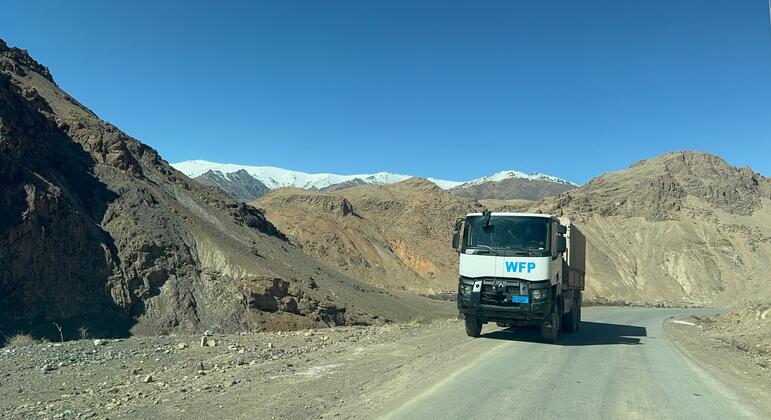
Hundreds of thousands in Afghanistan face severe hunger and poverty, with challenges amplified by recurrent floods, earthquakes, diminishing humanitarian funding, and border crises. This complex environment presents significant hurdles for organizations like the World Food Programme (WFP) in delivering essential aid.
Logistical Hurdles for Schoolchildren’s Nutrition
For many Afghan schoolchildren, fortified biscuits from the WFP represent their most nutritious meal. However, transporting these supplies into the country is a major logistical undertaking. A recent delivery of 397 metric tons of biscuits, destined for 172,000 students and funded by a US$3.5 million contribution from Indonesia, highlighted these difficulties.
The shipment initially departed from Surabaya, Indonesia, bound for Karachi, Pakistan. The original transit plan involved a 7,000 km truck journey across Pakistan. However, heightened tensions between Pakistan and Afghanistan resulted in border closures, compelling the WFP to explore alternative routes.
Addressing Hunger Amidst Border Closures
Corinne Fleischer, Director of WFP Supply Chain and Delivery, stated, “hunger doesn’t wait for routes to reopen.” WFP shipping officers promptly rerouted the cargo to Jebel Ali port in Dubai. The revised plan was to ship the aid across the Persian Gulf to Iran and then overland. However, geopolitical instability in the Middle East, which led to the closure of the Strait of Hormuz, necessitated another change in plans.
WFP logisticians reassessed their options and identified a new land corridor. This route would take the aid from Dubai through the Caucasus region to landlocked Afghanistan. Although more expensive and intricate, this route added an additional 8,000 km but emerged as the only feasible option.
An Epic Journey: From Dubai to Kabul
A convoy of 21 trucks commenced its journey from Dubai, traversing the United Arab Emirates and Saudi Arabia, then proceeding through Jordan, Syria, Türkiye, and Georgia. The cargo was then ferried across the Caspian Sea from Baku, Azerbaijan, to Turkmenistan. Finally, the aid entered Afghanistan via the remote Torghundi border crossing, continuing to Kabul. This extensive journey involved navigating new customs procedures, security assessments, and transport permits across seven international borders.
Truck drivers encountered significant delays at border crossings, managing extensive paperwork and finding brief rest periods. Hüseyin Sarraç Ulus, a Turkish truck driver involved in the Dubai to Caspian Sea segment, described the challenges: “I remember the ferry line at Alat port [Baku] where hundreds of trucks were waiting to cross – the line was close to 30 km long.”
Driver Dedication and Successful Delivery
“We drove around 11 hours a day and slept in the truck cabin most nights – it was not always comfortable, but we are used to it,” Ulus recalled. “We ate simple food like soup, bread, rice and tea. But it felt good. Knowing the cargo was helping children made me proud to be part of the journey.”
At a WFP warehouse in Kabul, Abdul Ahad Monib, a Supply Chain and Delivery officer, expressed relief upon the trucks’ arrival. “We followed every step of the journey closely – every delay, every border crossing, every change of plan,” he stated. After weeks on the road, the biscuits successfully reached children in schools across Ghor, Nuristan, and Paktika provinces.
“For the children, it’s a packet of biscuits that helps them stay healthy,” Monib concluded. “For us, it’s a logistics feat. No one sees the thousands of kilometres, the delays or the rerouting behind each packet. But that’s exactly the point – whatever the obstacles, WFP delivers.”