
In the eastern Democratic Republic of Congo (DRC), children impacted by escalating conflict are finding renewed hope through the establishment of new schools, providing safe spaces for peace and education. As thousands of families are displaced by violence, the disruption of educational facilities poses significant risks, including exposure to violence, hunger, trauma, and a lack of protection, with girls and children with disabilities facing disproportionate challenges. Consequently, millions of children across the nation are unable to access schooling.
A new two-year initiative, funded by the UN’s Education Cannot Wait (ECW) fund with $10 million, is set to support over 62,000 crisis-affected children in Ituri Province. This program specifically targets girls, internally displaced children, and other vulnerable groups. Key components include the construction of secure classrooms, comprehensive teacher training, the provision of essential learning materials, school feeding programs, and crucial mental health and psychosocial support services.
While the DRC has seen a substantial increase in primary school enrollment in recent years, the persistent conflict in the eastern regions jeopardizes this progress. Insecurity makes children susceptible to recruitment by armed groups, sexual violence, abduction, and severe psychological distress. For adolescent girls, unsafe schools or those located far from home increase their vulnerability to exploitation, abuse, and early school dropout.
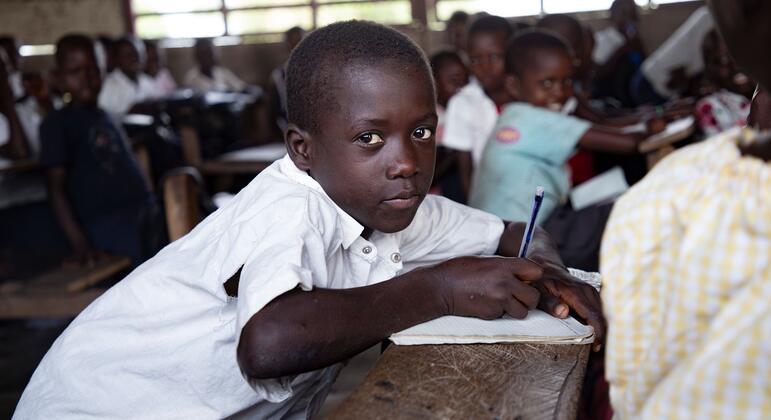
In this challenging environment, education is recognized not only as a developmental objective but also as a critical tool for protection and fostering stability. This latest initiative builds upon the success of previous programs that have already reached more than 125,000 children. Newly constructed classrooms at Mabanga Primary School are now offering improved learning conditions. “Seeing the new classrooms being built makes me so happy because now I can study with my friends without being distracted,” shared 8-year-old student Kennedy.
The program in Ituri focuses on bolstering infrastructure, enhancing teacher capabilities, expanding mental health and psychosocial services, strengthening child protection systems, and actively addressing risks associated with gender-based violence. Alternative learning pathways are being introduced, including catch-up programs designed for children who have been out of school for extended periods. Support for children with disabilities is also a central priority.
Educating the burgeoning youth population in fragile areas like eastern DRC is paramount to mitigating global instability. Children denied education perpetuate cycles of poverty and conflict, hindering economic development and regional security. Investing in education yields significant long-term advantages, such as increased lifetime earnings, improved health outcomes, enhanced civic engagement, and a reduced likelihood of joining armed groups. The hopes of individuals like Shadrac in eastern DRC and Jérémie’s plea for peace underscore the critical role that rebuilding and accessing schools plays in shaping the nation’s future.