
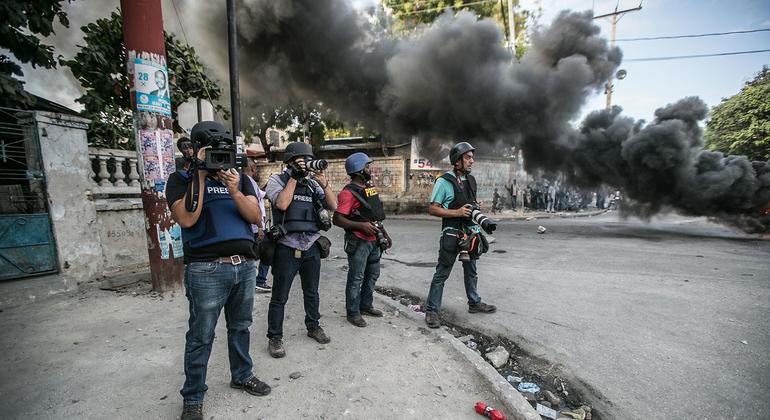
Haiti is grappling with pervasive insecurity and deepening poverty, forcing approximately 1.4 million people to flee their homes due to escalating gang violence.
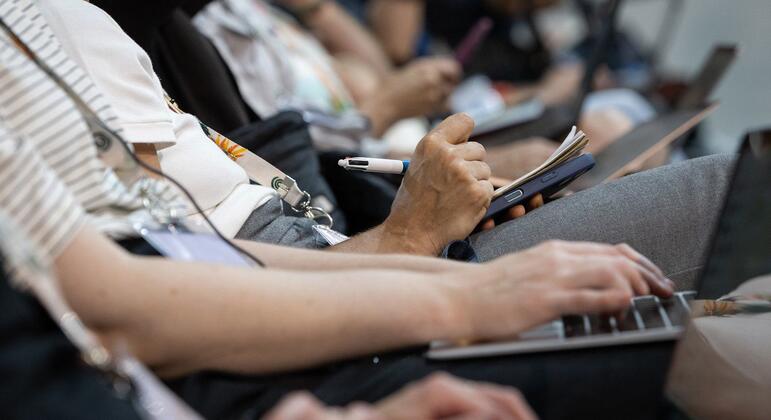
According to UNESCO’s Observatory of Killed Journalists, 14 media workers have been killed in Haiti since 2021. Ahead of World Press Freedom Day on May 3, UN News spoke with two journalists working in the capital, Port-au-Prince, about the dire situation.
Jean Daniel Sénat, a journalist for the daily newspaper Le Nouvelliste and Radio Magik 9, highlighted the extremely challenging and restrictive environment journalists operate in. “Gangs now control more than 80 percent of the Port-au-Prince metropolitan area,” Sénat stated.
Oberde H. Charles, an editor for Le National newspaper and Télévision Pacifique, described the inability to move freely and the limited communication between different departments within the country and certain city neighborhoods with restricted access, which hinders journalistic work.
Sénat emphasized that tasks such as gathering information in the field, researching firsthand sources, speaking with witnesses, and telling stories are severely compromised by the constant threat from criminal groups. He also noted that police sometimes accuse journalists of collaborating with gangs because they can access neighborhoods controlled by these groups.
Charles recounted the recent kidnapping of two colleagues and recalled that in 2022, a journalist was killed by police gunfire during protests where textile workers demanded improved conditions. Sénat added that dozens of journalists have been killed, some abducted, and others forced to flee the country and live in exile due to threats.
Le Nouvelliste newspaper lost its headquarters in February 2024, and Radio Magik 9 had to abandon its premises due to the advance of criminal groups. Sénat personally had to move twice due to insecurity, and some colleagues survived assassination attempts, while others are missing, with their families unable to get any news.
Charles mentioned that many colleagues have sought refuge in Canada, France, or the United States, feeling threatened. He stressed the bravery of journalists who continue to work in Haiti despite the dangers.
Sénat reported that some radio stations have ceased broadcasting, journalists have lost their jobs, and some have sustained physical injuries. He noted one journalist lost an eye, another was shot in the leg, and a third is still hospitalized in Cuba. He also pointed to the significant emotional trauma resulting from the violence perpetrated by criminal groups.
Charles asserted that the conflict in Haiti is far more horrific and deadly than those in Israel or Ukraine. Sénat warned that if they do not document and inform, the public will pay the price, with unheard voices and untold stories. He underscored the need for a robust media to help outsiders understand what is happening in Haiti and to gain a clear comprehension of the country’s internal situation.
Charles believes Haiti needs a strong media that works objectively and provides good, accurate information, enabling people to know which areas are safe to travel to and which to avoid. He added that a lack of information can jeopardize democracy and individual freedom.