
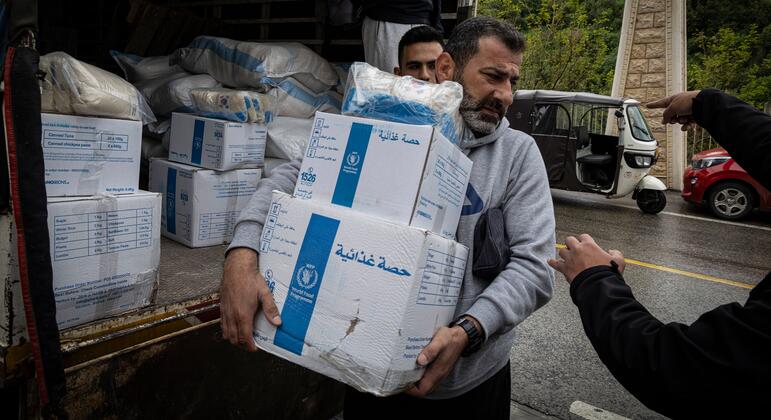
The United Nations (UN) has issued a fresh appeal for funding as the humanitarian crisis in Lebanon intensifies due to ongoing conflict. The UN Humanitarian Coordinator for Lebanon, Imran Riza, highlighted the escalating needs, stating, “Every day of conflict, humanitarian needs grow; our work is far from over… we need financing.”
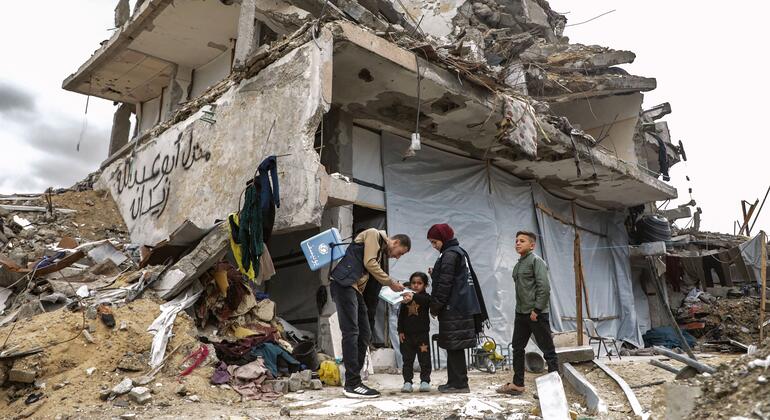
Speaking from Beirut, where violence reportedly persists despite a ceasefire announcement on Wednesday, Riza expressed shock at the destruction caused by airstrikes, drone attacks, and artillery fire. He noted that hospitals, government buildings, agricultural land, water stations, and schools have been damaged or are being used to shelter displaced populations.
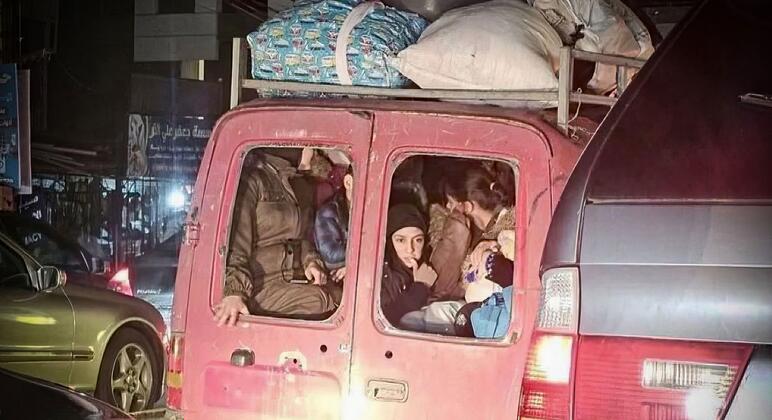
Since the latest escalation of violence, over 3,500 people have been killed and more than 10,000 injured. Approximately one million individuals remain displaced from their homes. “Health workers and first responders are facing an unprecedented scale of death and injury,” Riza said, adding that neighborhoods have been reduced to rubble.
Riza also addressed the profound and lasting trauma on families from repeated displacement, inadequate shelter conditions, and uncertainty about returning home. He stressed that providing critical aid in these circumstances is extremely complex and that support for the most vulnerable must be urgently scaled up. “There are constant orders for multiple displacements. Even this morning, orders were given, and people are constantly on the move. So it is very difficult to know where people are at any given time,” he added.
The UN’s Office for the Coordination of Humanitarian Affairs (OCHA) noted in an accompanying update that “Affected populations are rapidly exhausting their coping capacities, and essential services are under increasing strain.”
Heightened Risks for Women and Girls
As with all conflicts, the mass displacement has amplified risks for women and girls across Lebanon. Andrew Saberton, Deputy Representative of the UN Population Fund (UNFPA), warned, “There is a lack of privacy, adequate sanitation, and basic protection measures in overcrowded shelters.”
Saberton estimated that “over 600,000 women and girls are at risk of gender-based violence.” He also highlighted that approximately 1,800 women are expected to give birth each month across Lebanon. “However, health facilities continue to come under attack, with hospitals and primary healthcare centers forced to close, making access to essential maternal health services increasingly difficult for women,” he stated.
Air Strike Tragedy
Saberton recounted visiting a UNFPA-supported primary healthcare facility and a safe space for women and girls in southern Lebanon, which had sustained severe damage from airstrikes while being rebuilt in 2025. These were among the few facilities still operating in the area.
Riza cautioned about the protracted displacement crisis emerging in southern Lebanon, noting that an estimated 28,000 people remain beyond Israel’s self-declared military line. He stated that approximately 68,000 people have not been able to return to their villages post-ceasefire following clashes between Hezbollah militants and Israel in 2024, either because it is not safe or because “primarily their villages have been destroyed.” Riza added that they estimate this number to be at least 200,000, and likely higher.
The emergency appeal, made on Friday, brings the UN and its partners’ total funding requirement for Lebanon to $639.9 million through August of this year.