

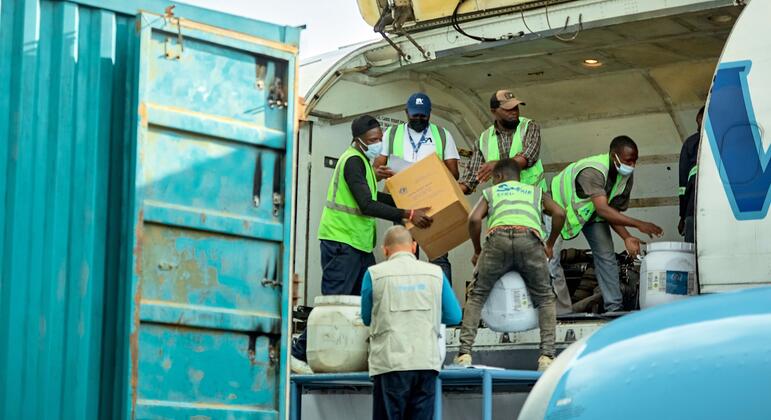
United Nations agencies are intensifying their efforts to combat a deadly Ebola resurgence in the eastern Democratic Republic of Congo (DRC), while simultaneously addressing a worsening hunger crisis in the region. Health authorities in both the DRC and Uganda are actively responding to the outbreak, which was declared on May 15 in Ituri province. UN aid workers are focused on strengthening preparedness and raising community awareness.
WHO Provides Swift Medical Support
The World Health Organization (WHO) responded within 72 hours of the outbreak declaration by delivering 11.5 tonnes of essential medical supplies and equipment. These critical items, dispatched from Kinshasa and the organization’s regional hubs in Dakar and Nairobi, include personal protective equipment, medical kits, tents, and vital water, sanitation, and hygiene supplies to prevent infection and manage cases effectively.
MONUSCO Enhances Logistics and Awareness Campaigns
MONUSCO, the UN peacekeeping mission in the DRC, is providing crucial logistical support to Congolese authorities and UN agencies. Since Sunday, the mission has established an air bridge to transport WHO emergency supplies from Nairobi to Bunia, the capital of Ituri province. In addition to airlifting nearly 30 tonnes of supplies by Wednesday, MONUSCO has also deployed four vehicles and two motorcycles to Bunia to bolster ground logistics.
Beyond logistical assistance, MONUSCO peacekeepers are conducting community awareness campaigns in areas like Tchabi and Fataki. These initiatives aim to educate residents on preventative measures, including personal hygiene and the risks associated with consuming bush meat. Peacekeepers are utilizing loudspeakers to emphasize regular handwashing, the correct use of protective equipment, and how to recognize Ebola symptoms. MONUSCO stated these efforts are designed to “enhance community preparedness, reduce panic, and protect vulnerable populations,” in line with its civilian protection mandate.
Ebola Outbreak Worsens Existing Hunger Crisis
The World Food Programme (WFP) has issued a warning that the current Ebola outbreak is exacerbating an already dire humanitarian situation in eastern DRC, a region long plagued by conflict. Across the nation, 26.5 million people face acute food insecurity. In Ituri and three other eastern provinces, approximately 10 million individuals are experiencing severe hunger due to ongoing conflict and displacement. Ituri province alone has around 1.7 million people, more than a third of its population, facing crisis or worse levels of hunger.
WFP is delivering essential assistance within the current health crisis zone in eastern DRC, including support for frontline health workers. The agency facilitates the transport of aid workers, medical supplies, and crucial cargo to remote areas and is prepared to increase its operational capacity. WFP also provides food and nutrition assistance to patients, survivors, contacts, and affected households. The agency requires over $214 million for its DRC operations, with more than $10 million specifically earmarked for Ebola response efforts.
UNICEF Prioritizes Child Protection
The UN child rights agency, UNICEF, has voiced significant concern for children, who are particularly vulnerable during Ebola outbreaks. Children face disruptions to essential services, the potential loss of parents and caregivers, stigma, psychosocial distress, and heightened protection risks. UNICEF has mobilized nearly 50 tonnes of supplies, including disinfectants, soaps, personal protective equipment, and water purification systems. An Emergency Rapid Response team is en route to Bunia to provide technical assistance in risk communication and community engagement. Despite the involvement of over 2,000 community health workers, there is an urgent need for additional capacity and resources, especially in remote locations.
Understanding the Rare Ebola Strain
The DRC has experienced 17 Ebola outbreaks since the virus was first identified 50 years ago. The current outbreak is attributed to the rare Bundibugyo strain, for which no vaccines or medicines are currently available. As of now, the DRC has reported 139 deaths and approximately 600 suspected cases, while Uganda has confirmed two cases. The WHO has declared the outbreak a public health emergency of international concern, necessitating a coordinated international response, but not a pandemic emergency.