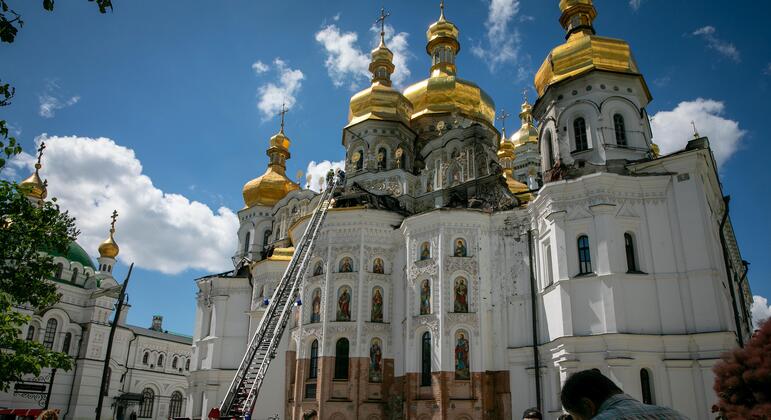

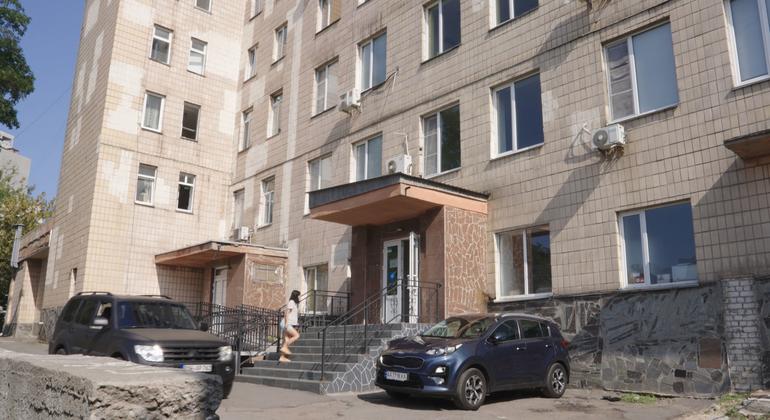
Ukraine’s healthcare system has endured over 3,000 attacks since the commencement of the Russian invasion, according to verified data from the World Health Organization (WHO). These assaults have impacted all facets of the healthcare infrastructure, from initial aid stations and maternity hospitals to ambulance services and pharmaceutical depots.
“Unacceptable Toll” on Healthcare Access
Approximately 80% of the documented attacks have targeted outpatient clinics, hospitals, and other care centers, leading to immediate casualties and significant disruption in service delivery. The remaining 20% of incidents involved attacks on medical vehicles, with nearly one-third of these resulting in fatalities, underscoring the high risks associated with medical transport.
Dr. Hans Kluge, WHO Regional Director for Europe, stated, “Each of these attacks is a violation of international humanitarian law and represents a patient unable to reach care, a health worker in danger, a community left without support. This is unacceptable. Health services are protected under international humanitarian law.”
Escalating Casualties and Growing Needs
The relentless attacks on Ukraine’s health infrastructure severely hamper the ability of medical personnel to provide essential care amid escalating needs. United Nations data indicates that approximately 12.7 million people across the country require humanitarian assistance, with 9.2 million specifically needing health support. Civilian casualties have also seen a substantial increase.
Dr. Jarno Habicht, WHO Representative in Ukraine, reported, “Since the beginning of this year alone, 186 health attacks verified by WHO have resulted in 15 deaths and at least 81 injuries, with numbers continuing to rise.” He added, “Compared to the same period in 2025, the number of deaths has nearly quadrupled, while injuries have nearly doubled.”
Sustained Support for Reconstruction
Ukraine’s Minister of Health, Viktor Liashko, expressed gratitude for the ongoing support from WHO and its partners. Current estimates project the cost of rebuilding the health sector over the next decade to be $23.6 billion. “At the same time, we are doing our utmost to ensure patients have access to the necessary medical care,” Liashko added.
The WHO emphasizes the critical need to sustain and strengthen Ukraine’s healthcare system to ensure uninterrupted access for millions. In the past year, the WHO provided essential health services to 1.9 million individuals, supplied medicines and equipment to nearly 1,000 health facilities, and trained over 2,500 health workers. Furthermore, medical evacuations for specialized care abroad were facilitated for more than 6,400 patients.
Aid for Farmers in Kherson
In a separate initiative, two UN agencies have launched a program to assist smallholder farmers in the southern Kherson region of Ukraine in restoring agricultural land and reviving farming activities impacted by the conflict. The initiative, led by the Food and Agriculture Organization (FAO) and the UN Office for Project Services (UNOPS) in collaboration with the Ministry of Economy, Environment, and Agriculture, includes a call for applications to the State Agrarian Register (SAR) for farmers in four conflict-affected and drought-prone communities. Eligible applicants are agricultural producers cultivating between three and 300 hectares of land, located at a safe distance from frontline areas.
Selected beneficiaries will receive cash assistance and vouchers to purchase essential items such as drought-adapted seeds, drip irrigation kits, and other agricultural inputs to resume production. They will also receive guidance and support in applying to the State compensation program for humanitarian demining. This effort is part of a broader joint project, funded through the Ukrainian Community Restoration Fund (UCRF), a UN-backed entity, totaling $2.6 million. The project aims to help farmer communities in the Kherson region safely return to agricultural production with the support of FAO and UNOPS.