
The 13th World Urban Forum (WUF13) has commenced in Baku, Azerbaijan, amidst escalating global challenges including deepening inequalities, rapid urbanization, and the intensifying climate crisis. Organized in partnership by UN-Habitat and the Government of Azerbaijan, the forum officially opened today with a record number of participants.
UN-Habitat officials consider the summit a crucial step in elevating housing and urbanization discussions to the highest political level. UN Secretary-General António Guterres emphasized that housing directly impacts individuals’ health, education, and future opportunities. He expressed pride in the ‘Pact for the Future,’ a 2024 UN agreement aiming to strengthen global cooperation and secure the needs of future generations, and the ‘Doha Political Declaration’ adopted last year, both of which prioritize housing. Guterres underscored housing as a human right and a fundamental aspect of human dignity, urging participants to make affordable housing a ‘shared reality.’ He cautioned that the crisis is no longer confined to low-income countries, stating, ‘No society is immune, from the rapidly growing cities in the developing world to advanced economies facing high rents and rising homelessness.’
In a separate video message, UN General Assembly President Annalena Baerbock acknowledged the absence of simple solutions. “More houses need to be built, but that alone will not be enough,” she said, advocating for a more comprehensive approach that links housing with infrastructure, climate resilience, financing, and urban planning. Baerbock stressed that sustainable urban development is impossible without the active participation of local communities, civil society, and residents themselves.
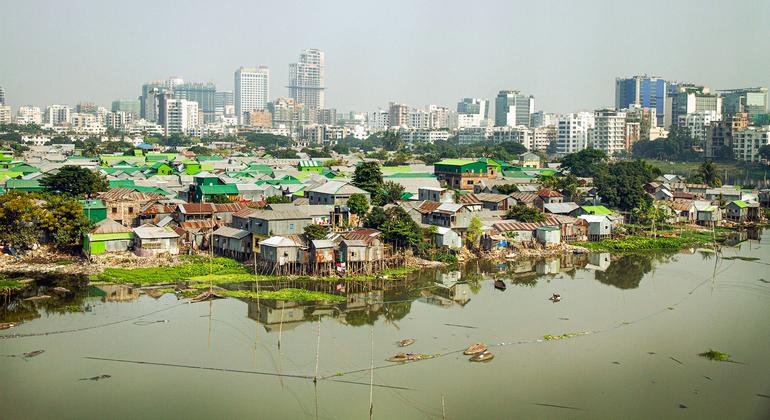
According to UN projections, approximately 1.5 million people migrate to cities each week. By 2050, over two-thirds of the world’s population will reside in urban areas, with nearly 90% of this growth concentrated in Africa and Asia. Concurrently, informal settlements continue to expand, with more than 30% of urban dwellers in developing countries living in slums lacking adequate infrastructure. Participants at the forum are convening to find solutions to these and similar challenges, including access to basic services, climate resilience, and more effective urban governance. Azerbaijan and Somalia are co-chairing the UN-Habitat Intergovernmental Working Group on ‘Adequate Housing for All’ for the 2025-2026 period, developing global recommendations for secure, sustainable, and affordable housing. Azerbaijani President Ilham Aliyev welcomed attendees, describing his country as a place ‘where East meets West,’ noting that this interaction of ‘old and new’ is reflected in Azerbaijan’s architecture. “By hosting this global gathering today, we have once again demonstrated our strong commitment to urban planning and our agenda to improve people’s lives,” he stated.
UN-Habitat Executive Director Anacláudia Rossbach highlighted the unprecedented interest shown in the forum. “Never before has a forum of this nature brought together such a broad and diverse global audience,” Rossbach remarked. “Despite the heavy rains and storms that have affected parts of Azerbaijan in recent days, we have gathered here in Baku with resilience, determination, and a sense of shared purpose.” On May 17th, Baku and the Absheron Peninsula experienced severe rainfall, recording 103 millimeters within nine hours, equivalent to 523% of the average monthly total for May. The extreme weather necessitated the relocation of the World Leaders Summit and several other events from the Olympic Stadium to the Baku Congress Center. The opening of the largest Urban Expo in WUF history was also delayed. The exhibition, spanning 3.5 hectares, features over 217 organizations from 66 countries. Governments, universities, international organizations, private companies, and startups are showcasing projects focused on affordable housing, digital technologies, climate resilience, and inclusive urban development.
At the heart of the Expo is the UN-Habitat pavilion, dedicated to the WUF13 theme, Shelter for All. Its concept is built around a spiral imagery symbolizing the connection between people, nature, and cities. Katerina Bezgachina, UN-Habitat’s Chief of Communications, explained to UN News that the idea stemmed from reflections on what ‘home’ signifies for people. “We started thinking about what home means to a person. And we realized that home is also our planet, our universe.” The spiral, prevalent in nature from galaxies to snail shells, signifies ‘always carrying one’s home.’ Visitors navigate a series of interconnected ‘spirals,’ each dedicated to a different theme. One explores the global housing crisis, showcasing solutions from around the world. “We didn’t want to just show the problems. We wanted to show that there are many solutions – people are not always aware of them,” she explained. Another section traces the path from the Universal Declaration of Human Rights in 1948 to the first Habitat conference in Vancouver in 1976, where UN-Habitat was established. The pavilion’s design also reflects Baku’s modern skyline and iconic landmarks such as the Heydar Aliyev Center and the Flame Towers, featured in the official WUF13 logo. Within the pavilion, 17 thematic sessions will be held in a dedicated UN-Habitat Arena from May 19th to 22nd.