
A New Era for International Peace and Security
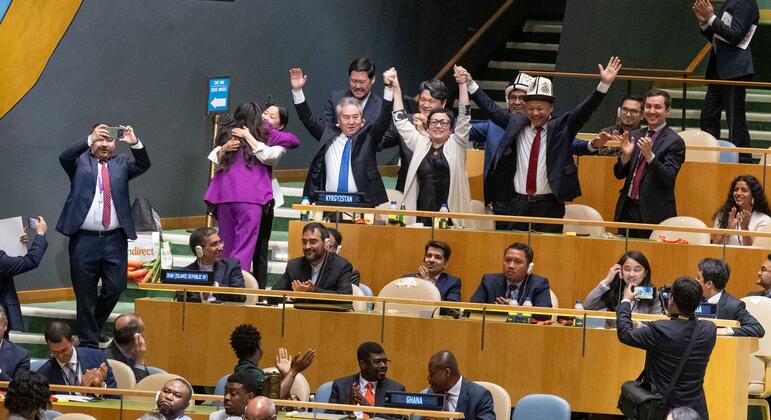
As the United Nations Security Council, the body primarily responsible for maintaining international peace and security, navigates some of its most challenging tests, new members are taking their seats. The Council’s work is increasingly influenced by geopolitical rivalries among its five permanent members. Deep divisions, particularly concerning conflicts in Ukraine and Gaza, delay decisions, and the use of the veto power sometimes hinders solutions to crises.
Calls for Security Council Reform Intensify
The Security Council faces growing demands for reform, with criticism that its structure does not reflect current geopolitical realities. UN Secretary-General António Guterres has repeatedly emphasized that international institutions are “stuck in the world of 1945, not the world of today,” and the Security Council is no exception. The African continent, with its 54 member states, is a strong advocate for change, arguing for greater representation in the Council’s permanent decision-making bodies. Demands for increased representation from developing countries are also rising.
The Veto Power Under Scrutiny
The veto power, which allows any permanent member to block a Council decision despite broader support, is also being examined more closely. Since 2022, a General Assembly resolution requires the General Assembly to convene and discuss the use of the veto whenever one is cast in the Security Council. While non-permanent members do not hold veto power, they can play an influential role in shaping discussions, forming coalitions, and advancing the concerns of their regions or the international community.
Mandate and Powers of the Security Council
Established under the UN Charter, the Security Council holds primary responsibility for the maintenance of international peace and security. Unlike General Assembly resolutions, decisions taken by the Security Council under the Charter can have legally binding force for all UN Member States. The Council has the authority to impose sanctions, authorize peacekeeping missions, establish international tribunals, and, in exceptional circumstances, authorize the use of force.
Behind Closed Doors: The Council’s Workings
Much of the Council’s work takes place around its horseshoe-shaped table in the Security Council Chamber at UN Headquarters in New York. While public meetings capture global attention, many of the Council’s most significant deliberations occur in private consultations and negotiations among its members.