
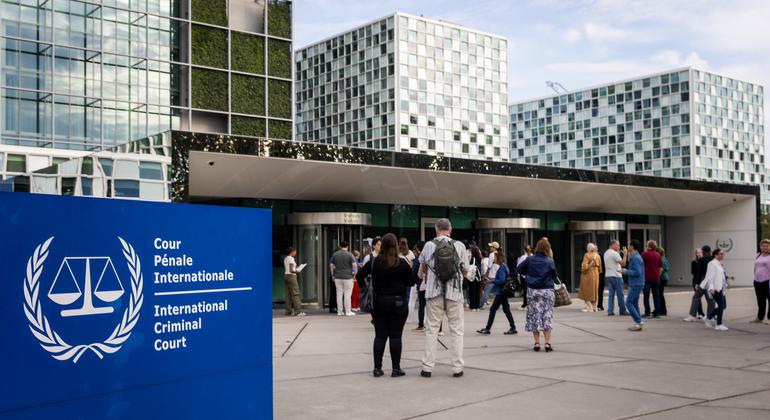
Judges at the International Criminal Court (ICC) are reviewing whether a case against former Philippine President Rodrigo Duterte can proceed to trial. The case concerns alleged crimes against humanity stemming from the Philippines’ ‘war on drugs.’ The four-day hearing is a critical juncture in determining if the allegations warrant a full trial.
The proceedings in The Hague aim to establish whether there are “reasonable grounds” to believe that Mr. Duterte committed the crimes alleged by the ICC Prosecutor. Presiding Judge Iulia Antoanella Motoc emphasized, “The Chamber will not render any decision on the guilt or innocence of Mr. Duterte during this hearing.”
Mr. Duterte, 80, previously served as Mayor and Vice Mayor of Davao City, one of the country’s largest urban centers. He is accused of murder and attempted murder, offenses allegedly committed between November 1, 2011, and March 16, 2019.
Allegations and Arrest
According to the prosecution, the case involves three alleged crimes against humanity: murders in and around Davao City, attributed to the “Davao Death Squad” during his mayoral tenure; the killing of “high-value targets” during his presidency; and murders and attempted murders during operations in barangays (administrative divisions) while he was president.
An official from the prosecution stated in court, “Mr. Duterte and his co-perpetrators shared a common plan to eliminate suspected criminals in the Philippines, including through murder.” An arrest warrant, issued confidentially on March 7, 2025, was declassified four days later. On March 12, Mr. Duterte was handed over to the ICC after his arrest by Philippine authorities and is currently held at the ICC Detention Center in Scheveningen, Netherlands.
Burden of Proof
At the ICC, suspects are presumed innocent until proven guilty beyond a reasonable doubt. Judge Motoc stated, “The burden of proof rests upon the Office of the Prosecutor (OTP) of the ICC to present sufficient evidence to establish the charges against Mr. Duterte at the required standard of proof.”
Victim Participation
During the hearing, prosecutors, represented by Deputy Prosecutor Mame Mandiaye Niang and senior trial lawyers, must support each charge with adequate evidence. Mr. Duterte’s defense team, led by Nicholas Kaufman, will also present their arguments. Legal representatives of 539 victims will also present their cases before the judges.
What Happens Next?
Following the conclusion of the hearing, the judges will issue a written decision within 60 calendar days on whether the case can proceed. They may confirm some or all charges and commit the case to a Trial Chamber; refuse to confirm charges and halt the proceedings; or postpone the hearing to request additional evidence or amendments.
About the International Criminal Court
The ICC, based in The Hague, is a permanent international court that prosecutes individuals accused of the most serious international crimes, including genocide, crimes against humanity, war crimes, and the crime of aggression. The Court was established by the Rome Statute, adopted in 1998 and entered into force in 2002. The Rome Statute outlines the Court’s jurisdiction, powers, and procedures, and is binding on signatory States.