

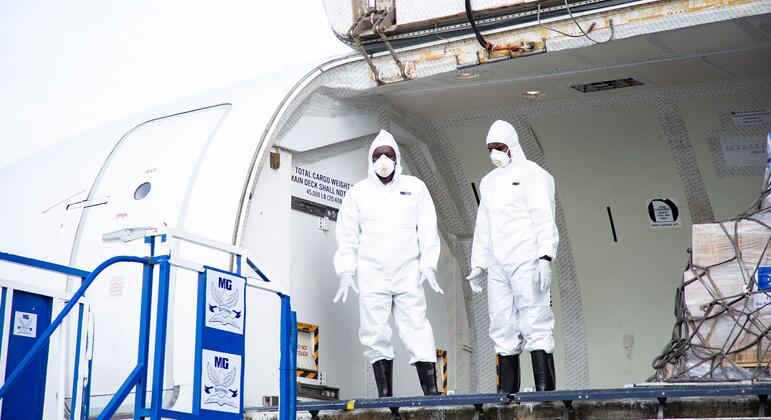
World Health Organization (WHO) Director-General Tedros Adhanom Ghebreyesus has called for an immediate ceasefire by armed groups in the Democratic Republic of Congo (DRC) to allow health workers access to patients and to curb the spread of the Ebola outbreak. Speaking amidst the ongoing epidemic affecting the DRC and neighboring Uganda, Ghebreyesus highlighted that UN agencies are working to control the spread of the rare and untreatable Bundibugyo Ebola virus. As of Wednesday, the DRC reported over 900 suspected cases, 105 confirmed cases, and 10 confirmed deaths. Uganda has recorded seven confirmed cases and one death.
‘Our Commitment Is Full’
Addressing the people of the DRC, particularly in the epicenter province of Ituri, Tedros emphasized WHO’s unwavering support. “We are working with a single purpose, under the leadership of the DRC Government and with all partners: to stop this outbreak and protect your communities,” he stated. “No one is working in isolation. No one is in conflict of interest. We are coordinated, committed, and we are here.”
Familiar Challenges
This marks the 17th Ebola outbreak in the DRC since the virus was discovered in 1976. The largest epidemic occurred between 2018 and 2020, spreading across North Kivu, South Kivu, and Ituri provinces. Tedros recalled his 14 visits to North Kivu during that outbreak, noting, “Ebola is not personally new to me.” That epidemic unfolded amidst armed conflict, displacement, and disrupted supply chains, with health workers constantly under threat. He acknowledged the pervasive insecurity during that period.
Heavy Burden in Ituri
Tedros noted that these challenges are no different in Ituri, where approximately 90% of cases are reported, with fewer cases in the Kivus. He underscored the burden carried by the region’s population: “You are already facing so many challenges – malaria, hunger, insecurity, and the struggle to keep your families safe. And now Ebola.” He added, “This is not fair, and I will not pretend it is.” He stressed the vital role of youth in informing their friends and families, which can help break the cycle of fear and silence and prevent the virus’s spread.
Support for Health Workers
For health workers in Ituri, Tedros called them the “backbone of this response,” assuring them of WHO’s solidarity and efforts to provide necessary support. He acknowledged that regional instability, characterized by “conflict and displacement, makes everything difficult – including reaching people who need care and keeping our health workers safe.” Tedros stated, “We cannot do this work if those who are trying to help are blocked or endangered,” adding that WHO collaborates closely with all relevant partners to reach communities.
Call for a Ceasefire
“Therefore, my direct appeal today is to all the warring parties in this region: Please declare a ceasefire. Even for a short period. Just long enough to allow health workers passage,” Tedros urged. “People are dying of Ebola who do not have to die. Children are sick. Families are suffering. No cause, no conflict, no grievance is worth condemning innocent people to death from a preventable disease.” He emphasized that a ceasefire, even temporary, would save lives. “I implore you, give us the space to help the people who need it most,” he pleaded.
Anger and Mistrust
Tedros also addressed the anger and mistrust in some communities, stating he understands the reasons. “Trust must be earned, it cannot be assumed,” he said. “We have not done everything right. But I promise you, we are here to learn, and we are here to help.” He explained that most previous Ebola outbreaks in the DRC were caused by the treatable Zaire strain.
‘Much We Can Do Together’
Although there is currently no approved vaccine or treatment for the Bundibugyo strain, he insisted, “there is much we can do together to prevent the spread of this virus and save lives.” “Early supportive care in our treatment centers can make a real difference. Coming early can mean the difference between life and death. And we will do everything we can, with you,” he affirmed. Tedros confirmed that WHO teams are already on the ground and will remain as long as necessary. “When this outbreak is over, we will not disappear quietly,” he vowed. “We will not forget you. We will stay and continue to work with you to build health systems that protect every person in every community.”