

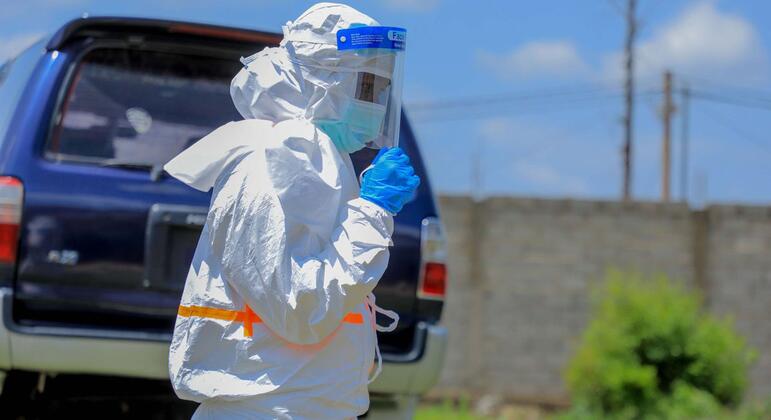
The World Health Organization (WHO) has issued a stark warning: the Ebola outbreak in the Democratic Republic of Congo (DRC) is being significantly worsened by a confluence of ongoing conflict, widespread hunger, and severe insecurity. WHO Director-General Tedros Adhanom Ghebreyesus highlighted that the current outbreak of the Bundibugyo virus in Ituri province is spreading rapidly within an environment characterized by insecurity, attacks on healthcare facilities, and significant population displacement. These factors are making it “nearly impossible” to effectively trace contacts and isolate infected individuals.
“We cannot build community trust or isolate the sick while bombs are falling,” Ghebreyesus stated. He noted that the Bundibugyo strain of Ebola, first identified in Uganda in 2007, currently lacks an approved vaccine or specific treatment.
The DRC has officially reported over 900 suspected Ebola cases and more than 220 suspected deaths. To date, only one death has been confirmed through laboratory testing. Neighboring Uganda has recorded seven confirmed cases linked to this outbreak, including two healthcare workers, one of whom has died.
Outbreak’s Rapid Evolution and Spread
The WHO has cautioned that the outbreak is not only spreading geographically but also exhibiting clear signs of cross-border transmission. While initially concentrated in Ituri province, the outbreak has now extended to 11 health zones. Cases have also been detected in North Kivu, affecting areas like Butembo and Goma, and in South Kivu, according to information from the UN Children’s Fund (UNICEF). Health officials observe that the virus is primarily spreading within family clusters and healthcare settings, often associated with caregiving roles, family gatherings, and unsafe funeral practices.
Conflict Hinders Critical Response Efforts
Containment operations are currently underway in one of eastern DRC’s most volatile regions. This area is plagued by persistent conflict involving numerous armed groups, including the Allied Democratic Forces (ADF), CODECO militias, and the Rwanda-backed M23 group. This ongoing violence has long restricted humanitarian access. A UN peacekeeping mission (MONUSCO) report from December 2025 detailed extensive violence in Ituri and North Kivu, which resulted in significant civilian casualties and mass displacement. Active fighting and movement restrictions imposed by armed groups continue to severely impede humanitarian operations, limit civilian mobility, and disrupt access to essential services.
Hunger and Disease Intersect in Humanitarian Crisis
The persistent violence exacerbates an already critical humanitarian situation. According to the IPC, a UN-backed global food security monitoring body, nearly 10 million people in the provinces of Ituri, North Kivu, South Kivu, and Tanganyika are facing acute hunger between January and June 2026. On a national level, an estimated 26.5 million people across the DRC are experiencing high levels of acute food insecurity. “Hunger and disease are old companions,” Tedros remarked. “People weakened by hunger are far more vulnerable to infections.”
Infrastructure Deficiencies Complicate Aid Delivery
The WHO has emphasized that the combination of conflict, inadequate infrastructure, and widespread insecurity is severely limiting the movement of aid and access to vital health services. “In many affected areas, health facilities are either non-functional or operating under severe constraints due to insecurity,” Tedros observed. “Poor road conditions further restrict the movement of goods and humanitarian assistance.” UNICEF has also raised concerns about the profound impact on children, who face not only the risk of infection but also significant disruptions to essential health, nutrition, and education services. Children affected by Ebola outbreaks frequently lose parents or caregivers, and the associated stigma can lead to further isolation.
Building Trust and Advocating for Ceasefire
The WHO is spearheading a comprehensive UN-wide response, deploying emergency personnel, essential medical supplies, and crucial funding. The agency is actively collaborating with community leaders to foster trust and combat misinformation by developing culturally appropriate public information materials in local languages. “Community trust is the foundation of effective public health response,” said Julienne Ngoundoung Anoko, a WHO Community Engagement Officer. “Without community support, outbreak control measures cannot succeed.” Tedros has issued an urgent appeal for an immediate ceasefire to ensure safe access for humanitarian and medical teams to reach affected communities, stressing that “Stopping this Ebola transmission depends entirely on humanitarian access.”