
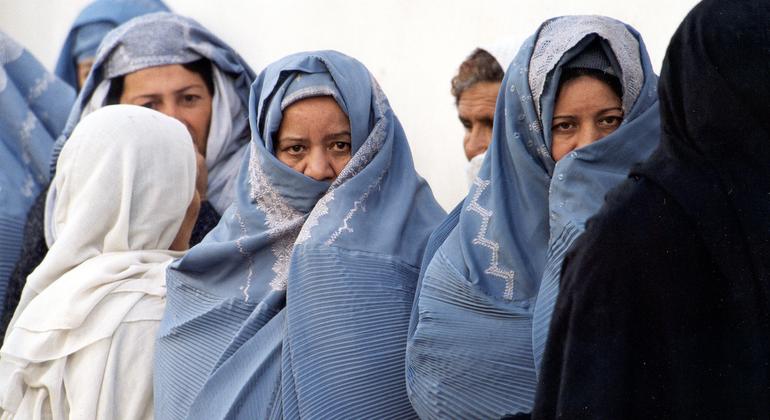
Afghanistan is confronting a severe crisis with the potential loss of approximately 25,000 women educators and healthcare professionals. This ongoing situation is significantly impacting children’s access to education and healthcare, while also undermining the nation’s economy and its vital public services. A recent analysis by UNICEF indicates a notable decline in female representation within the civil service, which has decreased from 21% to 17.7% between 2023 and 2025.
Girls Barred from Education
Since September 2021, Taliban authorities have prohibited over a million girls from pursuing secondary education. Projections suggest that if this ban continues until 2030, more than two million girls will be denied education beyond primary school. This trend is expected to worsen Afghanistan’s already low female literacy rates. UNICEF Executive Director Catherine Russell stressed that Afghanistan cannot afford to lose future professionals in critical fields such as teaching, nursing, medicine, midwifery, and social work, who are essential for maintaining services. She urged the de facto authorities to end the ban on girls’ secondary education and called for sustained international support for girls’ right to education.
Essential Services Under Threat from Professional Deficit
The report highlights a two-pronged crisis for Afghanistan: the departure of skilled female professionals and the prevention of a new generation from entering these vital professions. By 2030, the country could face a deficit of up to 20,000 women teachers and 5,400 healthcare workers. The education sector is already feeling the effects, with the number of female teachers in basic education dropping by over 9%, from nearly 73,000 in 2022 to approximately 66,000 in 2024. This reduction jeopardizes children’s learning, particularly for girls, who are more likely to attend and remain in school when taught by female educators.
Severe Impact on Healthcare Access
The healthcare sector is particularly vulnerable, as cultural norms often necessitate female patients being attended by female medical staff. UNICEF warns that a dwindling number of female health workers will directly restrict access to essential maternal, newborn, and child health services, thereby increasing risks for women and children. Furthermore, the restrictions on girls’ and women’s education and employment lead to an estimated annual economic loss of $84 million for Afghanistan. These financial losses are projected to escalate as women and girls remain excluded from education and the workforce.
UNICEF remains committed to supporting children’s education in Afghanistan. In 2025, the agency provided emergency aid to over 3.7 million children in public schools and supported 442,000 children, 66% of whom are girls, through community-based learning programs. UNICEF has also contributed to the construction and renovation of 232 schools. Ms. Russell stated that denying Afghan girls secondary education deprives the nation of its potential, trapping girls, their families, and communities in poverty, weakening health outcomes, and stifling the economic growth that an educated female generation could foster.