
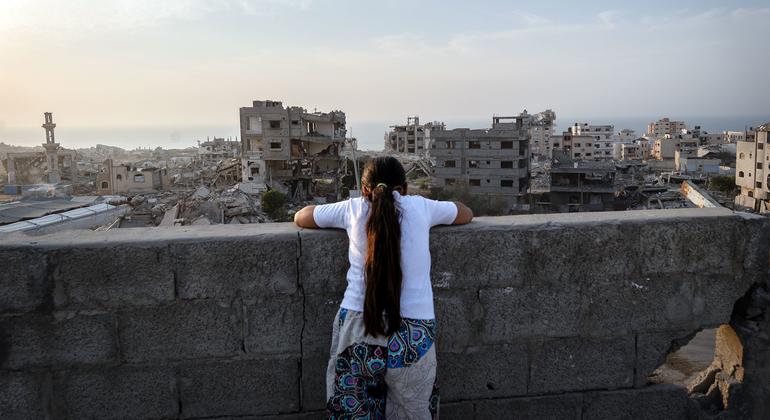
The UN sexual and reproductive health agency UNFPA has painted a grim picture, marked by alarming statistics. According to UNFPA data, 96% of children in Gaza feel death is imminent in 2026, reflecting the profound fear and trauma they endure. Among adolescents and youth, Post-Traumatic Stress Disorder (PTSD) stands at 61%, depression at 38%, and anxiety at 41%. Furthermore, one-fifth of adults contemplate suicide almost daily. This situation is not merely psychological distress but a widespread mental health emergency, as highlighted by Sima Alami, program manager for adolescent and youth programs at UNFPA.
Girls are among the most vulnerable in this escalating crisis. Child marriage, which had previously declined in Gaza, has sharply risen again. As families struggle for survival, rates are climbing back up, reversing a trend where they had fallen from 25.5% in 2009 to 11% in 2022. A recent UNFPA study revealed that 71% of participants in Gaza reported increased pressure to marry off girls under 18. In a short monitoring period, over 400 marriage certificates for girls aged 14-16 were issued by emergency courts, though figures are likely underreported. Alami explained that some families view marriage as a survival strategy amidst displacement, poverty, and insecurity, while others believe it offers protection.
The consequences are severe. Approximately 10% of newly registered pregnancies in Gaza in 2025 were among adolescent girls, a significant increase compared to pre-war levels. Access to healthcare has also dramatically decreased. Only 15% of health facilities in Gaza can provide emergency obstetric and newborn services, heightening the risk of complications for young mothers and their infants. Child marriage exposes girls to violence; evidence suggests 63% of girls married early experience physical, psychological, or sexual violence. Reports indicate rising divorce rates and widespread severe psychological distress among married minors. In extreme cases, over 100 suicides or attempted suicides have been documented among victims of violence, underscoring child marriage as a form of gender-based violence.
While Gaza remains the epicenter of the crisis, conditions are also deteriorating in the West Bank. Increased violence, military operations, and settler attacks have led to displacement, particularly in refugee camps. Movement restrictions and checkpoint closures disrupt daily life, causing many schools to shut down. Children and youth live under constant stress, fearing raids, movement restrictions, and uncertainty about accessing livelihoods and services, leading to chronic anxiety and a persistent sense of insecurity. These pressures can have long-term consequences, shaping behaviors and mental health into adulthood. Some young people are even considering leaving Palestine entirely.
Amidst these challenges, UNFPA has expanded its support services. Over the past three years, the agency has reopened and supported over 35 safe spaces for women and girls, offering case management and multisectoral interventions for gender-based violence. More than 120,000 hygiene and dignity kits have been distributed, and over 15 multipurpose youth centers operate across Palestine, with 11 dedicated to girls. These spaces provide psychosocial support, education, and life skills, fostering community engagement and a sense of belonging. Young people are active partners in the design and implementation of initiatives. Services include group sessions, psychological first aid, individual counseling, and a digital hotline called ‘Youth Window’ offering free remote support to marginalized youth. However, challenges persist. Displacement, limited resources, and difficult conditions, especially in Gaza where some safe spaces operate in tents exposed to harsh weather, continue to hinder operations. Alami emphasized the need for integrated interventions linking psychosocial support with food, health, and education services, as many families prioritize survival over mental health.