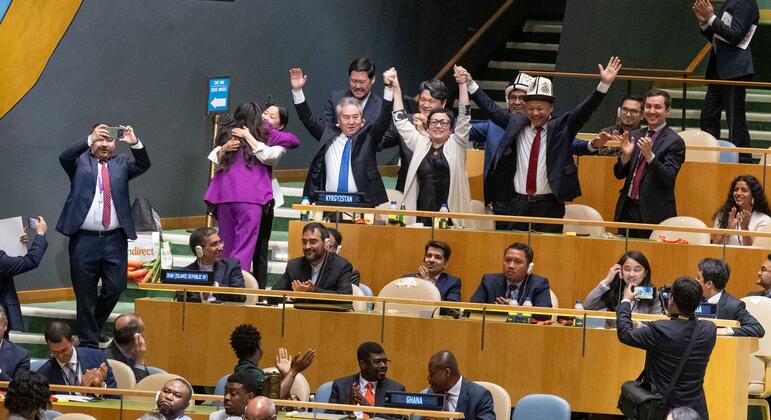

A new United Nations report indicates that progress can be made in alleviating the global housing crisis, emphasizing successful solutions implemented in favelas and informal settlements. The report was released by the UN Human Settlements Programme (UN-Habitat) during the 13th World Urban Forum (WUF13) in Baku, Azerbaijan. It argues that the UN system should play a broader role in guiding countries toward long-term housing solutions grounded in human rights, climate resilience, and community participation, rather than focusing on short-term fixes.
The biennial forum convenes policymakers, practitioners, and community leaders, offering a platform to integrate local experiences with global decision-making on topics ranging from slum upgrading and affordable housing finance to climate adaptation and post-conflict reconstruction. The report highlights that 3.4 billion people lack access to adequate housing, with over 1.1 billion living in informal settlements. Despite the scale of these challenges, the report also draws attention to workable solutions.
UN: A Coordinator, Advocate, and Partner
UN-Habitat asserts that the United Nations should not only raise awareness but also actively assist governments, cities, and communities in developing practical solutions. The report advocates for housing to be central to sustainable development, receiving greater political priority through the New Urban Agenda. Adopted in 2016, this agenda serves as an action-oriented framework setting global standards for urban planning and advancing the urban dimensions of the Sustainable Development Goals (SDGs). Anacláudia Rossbach, UN-Habitat Executive Director, stated that housing should not be viewed merely as a market commodity, emphasizing, “Adequate housing represents one of the most powerful entry points to accelerate sustainable and inclusive development.”
The UN’s role includes:
- Assisting governments in developing housing policies.
- Promoting housing as a human right.
- Coordinating international cooperation.
- Supporting climate-resilient urban planning.
- Championing community-led upgrading projects.
The report underscores the importance of partnerships with local communities over top-down solutions, illustrating this approach with case studies from various regions.
Thailand: Community-Driven Upgrading
The Baan Mankong program in Thailand is presented as a model of participatory housing development. Instead of displacing residents of informal settlements, this program provides infrastructure financing and supports collective land tenure arrangements that allow communities to improve their on-site housing. UN-Habitat uses this example as evidence that informal settlements should not be viewed as failures of urban development. However, the report also acknowledges challenges, noting that relying on community savings groups can lead to uneven progress, as poorer communities may struggle to meet requirements.
Jordan: Inclusive Urban Spaces
Interventions in Amman include the transformation of a large open space near the El-Husein refugee camp into a climate-resilient, age-sensitive park. Projects like these aim to reduce tensions between displaced populations and host communities, improving living conditions for everyone. The report calls for cities to treat displaced populations not as temporary outsiders but as urban residents with rights to services, employment, and secure housing. The UN frames its role in this context, considering the over 123 million people displaced by conflict, violence, and persecution, and millions more displaced by disasters, as bridging the gap between humanitarian aid and long-term urban development.
Brazil: Upgrading Over Evacuation
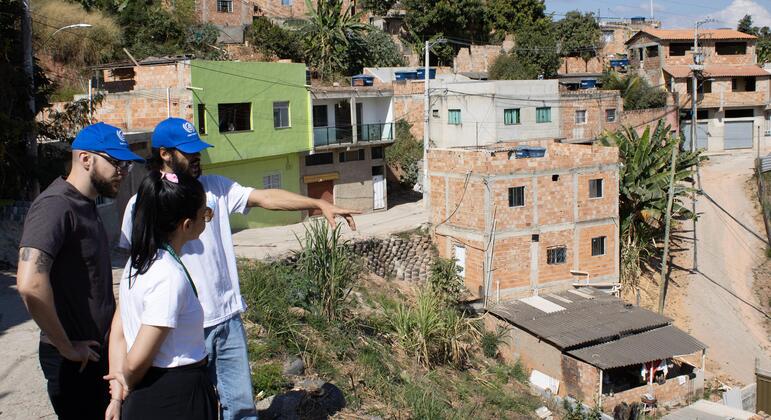
Brazil’s favela programs demonstrate a shift away from eviction and slum-clearance policies, which the report notes often deepen poverty and social exclusion. UN-Habitat advocates instead for “in-situ upgrading,” which improves roads, sanitation, drainage, and housing conditions without displacing residents. This approach allows for tailored solutions, from housing improvements in São Paulo and drainage projects in Recife to cable car construction in Rio de Janeiro’s Complexo do Alemão.
Climate-Resilient Housing
The report places housing at the center of the climate crisis. Buildings account for approximately 37% of global greenhouse gas emissions, and climate-related hazards could destroy 167 million homes by 2040. In 2023 alone, natural disasters caused $280 billion in economic losses, much of which was uninsured. UN-Habitat argues that climate-resilient housing must become a global priority. Featured examples include community-led upgrading projects in Cambodia and innovative governance initiatives in the Philippines where residents collectively plan and build their homes. In Tanzania, rapid electrification increased access from 15% (2020) to 40% (2022), offering an alternative to polluting fuels like charcoal and paving the way for cleaner practices like e-cooking. To support this transition, the national electricity provider offers financing plans for appliances, while project partners have developed tariff guides suitable for electric cooking. The report also warns that climate adaptation should not come at the expense of low-income communities through forced evictions or “green gentrification.”
Housing is a Human Right
The UN frames housing not just as an economic issue but as a matter of human rights. The report urges governments to strengthen protections against forced evictions, recognize diverse forms of land tenure, and more closely involve communities in decision-making processes. Discrimination persists even in developed countries. In Europe, many first and second-generation migrants are concentrated in low-income neighborhoods, while in the United States, housing discrimination increased in most cities between 1990 and 2014. The report advocates for housing policy to move beyond narrow homeownership models to include rental housing, cooperatives, and community-led approaches. For UN-Habitat, there is no single global solution; progress depends on collaboration between governments, international organizations, and residents themselves. As Executive Director Anacláudia Rossbach wrote in the foreword, “the steps we take now will determine whether housing becomes a foundation for stability and growth or a source of violent vulnerability.”