
Conditions in Gaza are intensifying due to relentless violence, with widespread rodent infestations and the spread of infectious diseases exacerbating the situation. Blockages preventing essential medical supplies from entering the enclave further compound these challenges.
‘I Feel Like I’m in a Prison’
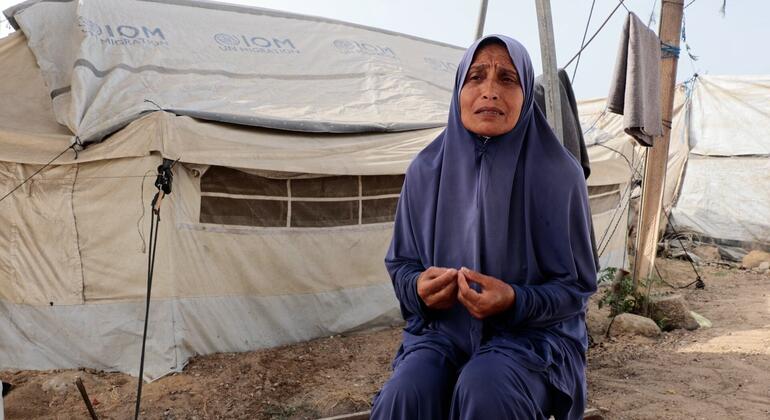
Umm Ahmad lives in a makeshift camp west of Gaza City with her family. After being displaced from Jabalia in the north, they have been forced to relocate four times before reaching their current camp.
“This tent has broken our backs; we can’t even stand up inside it. I feel like I’m in a prison,” she said, gesturing towards their rudimentary shelter.
Pointing to a bag of bread hanging at the tent’s entrance, she added, “We hang the food to keep it away from rats. Rats and rodents sleep with us in the tent. This is a greater suffering than the war.”
Water Scarcity Plagues Displaced Families
In a narrow corridor between tents, Umm Ahmad stands at a small counter with soap and water for washing dishes. Due to water scarcity, families rely on storing meager amounts of water in plastic containers, insufficient for daily needs.
“There is very little water; we can clean when it is available. As you can see, resources are limited, and the situation is disgusting. This is life in the tents,” she stated.
UN partners on the ground report that access to water remains a significant issue, with three out of every four families dependent on water deliveries by trucks. Humanitarian partners distribute approximately 24,000 cubic meters of water daily through nearly 2,000 distribution points.
However, these deliveries rely on generators and machinery at risk of malfunction due to a lack of maintenance and repair materials. Aid organizations continue to stress the urgent need for essential supplies to enter Gaza to prevent critical equipment failure.
Lives Reduced to Rubble
Sitting on a small plastic barrel, Umm Ahmad recalls the spacious home and life she once had: “We lived in a five-story house with all the necessary amenities for living, with apartments where my children would get married, but it was destroyed by the war.”
“We had everything, we lived in luxury, and suddenly our lives were turned upside down, and we are living in tents. This is our fourth displacement; we have been on the streets for three years.”
More than two and a half years after Hamas attacked communities in southern Israel, triggering a major counteroffensive, fabric tents spread across Gaza are no longer just temporary shelters for the displaced but a long-term daily reality for hundreds of thousands of Palestinians.
‘A Life of Humiliation’
With frustration and sorrow, she told our correspondent, “No matter what I tell you, I cannot describe what life is like in the tents. In winter, the tent filled with rain every day, and the wind blew it away. We rebuilt it and couldn’t dry our clothes or our beds.”
“In summer, the suffering is more severe due to rats, other rodents, and insects. This is a life of humiliation; I can no longer bear it,” she said.
When asked about privacy in the tents, Umm Ahmad explained, “There is no privacy. We all live crammed together in the tent. Now, two of my sons are getting married, and we are trying to set up two tents for them, but there isn’t enough space. You can’t imagine what we are going through. Toilets and hygiene are another issue.”
The health situation in the region is devastating. This year, 22 attacks on healthcare in Gaza have been reported, with less than half of hospitals operating partially, and not a single hospital functioning fully.
Umm Ahmad smiled as her two grandchildren approached her, and she began to comfort them. Where there was once ample space, life in the camp is a constant struggle to secure even the most basic necessities.