
Edem Wosornu of the UN Office for the Coordination of Humanitarian Affairs (OCHA) briefed journalists on the dire situation in Haiti, reporting that large parts of the Caribbean nation remain under the control of violent armed gangs. Escalating insecurity, profound protection needs, mass displacement, shocking levels of gender-based violence (GBV), and a challenging operational environment are exacerbating the crisis.
Millions Need Aid Amidst Widespread Hunger
OCHA reports that over half of Haiti’s population, 6.4 million people, require humanitarian assistance. Approximately 5.7 million face hunger, forcing families to skip meals and children to leave school to support their families. A staggering 1.5 million people, 12% of the population, are displaced from their homes. Wosornu emphasized that these are not just numbers but represent families uprooted and children who have lost their homes.
Escalating Violence and Its Impact on Daily Life
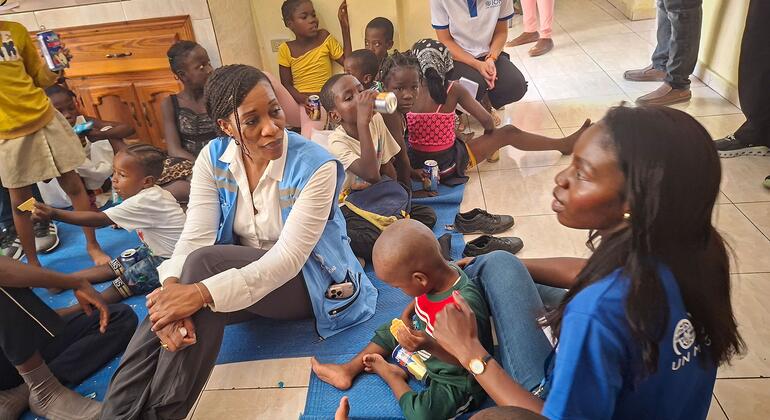
During a visit from March 16-20, Wosornu observed a significant deterioration since his previous mission two years ago. He visited the capital, Port-au-Prince, where 90% of the population is reportedly under gang control, as well as areas like the Centre Department. Recent violence there led to approximately 80 deaths and displaced 13,000 people. Wosornu described visiting overcrowded settlements, including a school designed for 400 students now sheltering around 2,800 individuals. He noted the presence of pests at night and skin rashes among children. Across the country, 1,600 schools remain closed due to insecurity, disrupting the education of 250,000 children, a critical concern for Haiti.
Protecting Women and Girls: A Growing Protection Crisis
The situation for women and girls is particularly alarming, constituting a severe protection crisis. Last year, 8,100 victims of gender-based violence were recorded, a 25% increase from the previous year, with half of the reported cases being rape. Wosornu met a 16-year-old girl with a three-month-old baby who was separated from her family and exploited by a man who offered assistance. One-sixth of GBV survivors are under 18, highlighting the tragic reality for many young girls. Wosornu also spoke with women whose vacant eyes reflected their trauma. However, due to underfunding for GBV response, only 30% of survivors receive medical attention or psychosocial support within the critical 72-hour window after sexual violence.
Commitment to Service Amidst Devastation
Despite the devastation in Haiti, the UN and its humanitarian partners remain committed to delivering services. Aid teams include national staff who are themselves displaced and threatened but dedicated to their work. Wosornu noted that these staff members sometimes negotiate with armed groups to deliver aid in extremely challenging areas. Humanitarian organizations are appealing for $880 million this year to support 4.2 million people in Haiti amidst declining international aid, with less than 20% of this amount currently met.
Haiti Cannot Wait: A Call for Sustained Support
Concluding his briefing, Edem Wosornu made three urgent appeals: an end to the violence, sustained support for humanitarian operations as aid is collapsing, and political solutions to end the crisis. He stressed the need for honesty, stating that humanitarian aid alone cannot change the fate of the Haitian people or the country’s trajectory. Sustainable investments in basic services are crucial for creating solutions, and while Haiti’s resilience is undeniable, support is more critical than ever.