
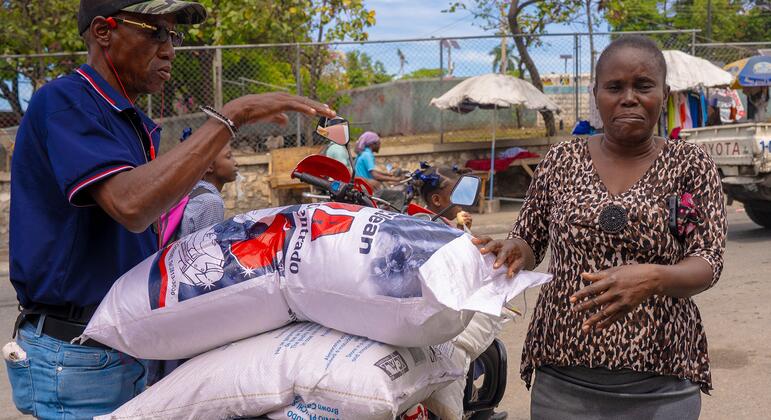
The World Food Programme (WFP) announced on Friday that more than half of Haiti’s population is facing a food crisis. The WFP, in collaboration with the government and partners, aims to provide urgent food assistance, school meals, social protection programs, and support for smallholder farmers, targeting assistance to 2.7 million people.
Wanja Kaaria, WFP Country Director for Haiti, cautioned, “These small improvements in food security figures should not lead to complacency.” She added, “The high cost of fuel and the resulting increase in food costs risk reversing these gains, pushing already vulnerable families into a deeper crisis and further destabilizing the situation.”
Haiti is experiencing a deepening food security crisis, attributed to nearly a decade of high levels of violence involving armed groups, political turmoil, economic hardship, and extreme weather events such as Hurricane Melissa, which struck the south in late 2025.
The WFP is calling for strong measures and funding to provide immediate relief and invest in long-term solutions to address food insecurity, which affects over half the population. “Fighting hunger is vital for restoring stability in Haiti. We cannot build peace when families have nothing to feed their children,” Kaaria stated.
The WFP requires $332 million to sustain its critical operations over the next 12 months. If adequate funding is secured, it plans to deliver critical emergency and resilience-building support to over 2.7 million people. Only 20% of the $880 million Humanitarian Response Plan for Haiti, amounting to $172 million, has been funded.
Violence and Displacement Spread Across the Country
Armed attacks earlier this week displaced hundreds of people from the South-East department. According to the International Organization for Migration (IOM), violence in the commune of Marigot on April 13 displaced over 1,300 individuals.
The IOM notes that this scale of displacement is unprecedented in the South-East department. This region, which previously served as a refuge for those fleeing violence elsewhere in the country, now hosts over 165,000 men, women, and children in informal settlements throughout the department.
Conflict has displaced over 1.4 million people in Haiti. In the capital, Port-au-Prince, approximately 300,000 people are living in crowded and unsanitary temporary shelters.