
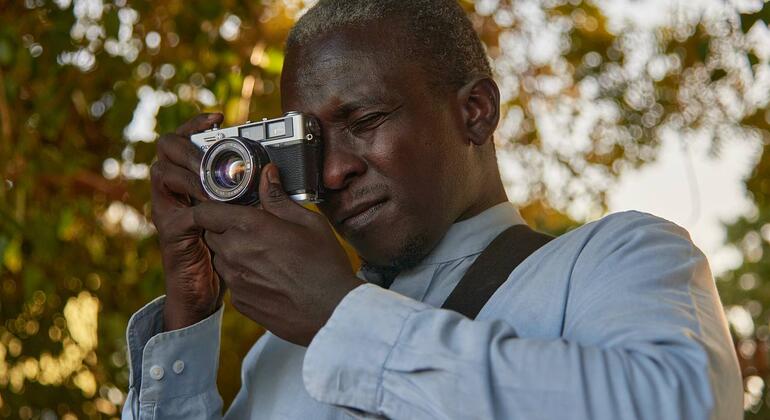
The Sudanese Journalists Syndicate has been awarded the prestigious UNESCO/Guillermo Cano World Press Freedom Prize for its crucial role in denouncing the deliberate targeting of media workers during the ongoing conflict in Sudan. The fighting, which erupted in April 2023 between the Sudanese Armed Forces (SAF) and the Rapid Support Forces (RSF), has plunged the nation into a severe humanitarian crisis.
Courage and Dedication in the Face of Danger
Since the conflict began, the Sudanese Journalists Syndicate has meticulously documented the immense challenges faced by media professionals. Their records show 32 journalists have died, and approximately 556 violations against media workers have occurred. Numerous newspapers and radio stations have also been shut down, making Sudan an exceptionally perilous country for journalists, according to UNESCO.
Khaled El-Enany, the UNESCO Director-General, lauded the syndicate’s members for their extraordinary bravery and steadfast commitment. He stated, “Despite immense challenges, they continue, day after day, to deliver accurate, lifesaving information to their communities when it matters most. Their commitment is a powerful example to us all and a vital service to truth, accountability, and peace.”
Safeguarding Values and Amplifying Voices
The announcement, made just before World Press Freedom Day on May 3, was hailed as a significant recognition. Abdelmoniem Abuedries Ali, the chair of the collective, emphasized that the award honors not only the syndicate but all Sudanese journalists striving to defend truth and press freedom under dangerous conditions. He added, “it reaffirms the vital role of independent journalism in safeguarding democratic values and amplifying the voices of civilians affected by war.”
Navigating Violence in a ‘Zone of Silence’
The conflict has drastically impacted news gathering and the media landscape in Sudan. Journalists face threats of violence and arrest, with an estimated 90 percent of media infrastructure destroyed. Internet and telecommunication blackouts further hinder reporting, creating what UNESCO describes as a “zone of silence” where disinformation and propaganda can spread unchecked, exacerbating hatred and polarization.
UNESCO has been actively supporting Sudanese journalists since the war’s inception. This support includes facilitating the establishment of the Sudanese Media Forum, comprising over 20 media outlets, which advocates for press freedom and maintains international attention on Sudan’s humanitarian crisis. Additionally, UNESCO has provided direct support to 49 journalists, including assistance with relocation to safer areas, and has established safe spaces for them in Port Sudan.
Press Freedom in Global Decline
The award also comes at a time when press freedom is facing a global decline. A recent UNESCO report indicates a 10 percent decrease in freedom of expression worldwide since 2012, a trend comparable to periods like World War I, the lead-up to World War II, and the late 1970s Cold War era. Self-censorship among the press has surged by nearly 70 percent between 2012 and 2025, highlighting internalized censorship as a significant threat.
Journalists, particularly women, are increasingly subjected to legal harassment, including defamation lawsuits and anti-terrorism regulations. Despite these challenges, UNESCO points to growing recognition of community media and the existence of legal frameworks in nearly half of the 194 countries reviewed as signs of hope. The agency will convene the World Press Freedom Conference in Lusaka, Zambia, to urge governments and civil society to recommit to supporting independent journalism.
About the Guillermo Cano World Press Freedom Prize
The UNESCO/Guillermo Cano World Press Freedom Prize is awarded annually to individuals or organizations that have made significant contributions to press freedom, especially in dangerous circumstances. Named after Colombian journalist Guillermo Cano Isaza, who was assassinated in 1986, the prize was established in 1997. Winners are chosen by an independent jury of media professionals. Past recipients include journalists covering Gaza and Maria Ressa, a co-recipient of the 2021 Nobel Peace Prize.