

Despite ongoing destruction, Ukraine’s second-largest city, Kharkiv, is actively preparing for a peaceful future. “We have to rebuild, regardless of the war, because if there is no rebuilding, there will only be ruins left, and those who left will not return,” stated Kharkiv Mayor Ihor Terekhov.
A major hub for industry, science, education, and culture, Kharkiv has become one of the most damaged cities in Ukraine since the full-scale invasion began. According to Terekhov, approximately 13,000 buildings, including around 10,000 residential structures, have been damaged or destroyed. This has displaced an estimated 160,000 residents. “There are bombings every day, and it is exhausting. Just surviving is exhausting,” he added.
While daily attacks persist, city planners, architects, engineers, and international organizations are collaborating with Ukrainian officials to envision the city’s post-war landscape.
Waiting Is Not an Option
Central to this effort is the UN4UkrainianCities initiative, spearheaded by the United Nations Economic Commission for Europe (UNECE). The project aims to support the revitalization and modernization of Kharkiv and Mykolaiv, responding to immediate needs while helping the cities rebuild in a smarter, greener, and more resilient manner.
From an external perspective, long-term urban planning during an active conflict might seem premature. However, for those on the ground, waiting is not an option. “The country is still under attack, and emergency work is largely required. However, recovery and reconstruction must happen in parallel,” explained project manager and architect Thâmara Fortes. Fortes emphasized that emergency repairs should also support future development. “If you build something now without thinking long-term, it might not serve the city in ten years. That’s why we help cities think not only about the emergency but also about how these interventions fit into the future.”
A New Master Plan
This future is being shaped by a new master plan for Kharkiv, focusing on sustainable infrastructure, affordable housing, innovative public spaces, and economic renewal. The project integrates strategic planning with pilot projects that test ideas in real neighborhoods. One of the most ambitious undertakings focuses on North Saltivka, a heavily damaged residential area. Initially launched as an architectural competition, the project has moved into the technical implementation phase. Five residential blocks and a kindergarten are being redesigned with energy-efficient insulation, modular extensions, and structural reinforcements. The goal is to create detailed technical documents that city officials can present to donors, investors, or development banks when funding becomes available.
“We are moving from concepts to implementation. We are not just doing analysis and assessment; we are giving cities something they can actually build with,” Fortes stated.
Bold Initiatives
The broader vision for Kharkiv includes five major pilot initiatives blending preservation, sustainability, and innovation. One project focuses on adapting historic centers, damaged by the war, for modern civic and cultural use while restoring their architectural heritage. Another aims to transform industrial riverfronts into green public corridors along the city’s 25-kilometer river system. A science and technology district near major universities is intended to help retain young talent and diversify the economy. Coal-dependent industrial zones are being reimagined as clean production hubs powered by renewable energy. This effort extends beyond infrastructure. UNECE and Ukrainian partners are working on housing policy reforms at the national level, including legislation on social rental housing and housing stock management.
‘Constantly Under Threat’
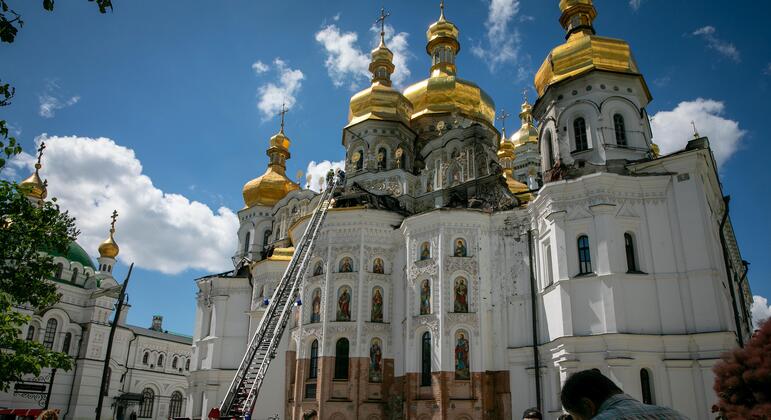
Meanwhile, local authorities continue to confront the harsh realities of war. “It’s impossible to get used to it. People are constantly under threat,” Terekhov said. Nevertheless, he believes it is time to envision how the city can be restored and what its future holds. “People live with the hope that we will rebuild everything today.” This hope is particularly poignant in a city known for its architectural heritage. Kharkiv’s museums, libraries, and historic mansions have sustained damage. Terekhov recalled attacks on historical buildings near the renowned Korolenko State Scientific Library and the city art museum. “These are jewels of Ukraine. Some buildings cannot be restored exactly as they were because they were hit by ballistic missiles. But we are trying to preserve this architecture.” The rebuilding effort has evolved throughout the war. According to Fortes, one of the most critical lessons learned has been resilience. “Sometimes there is no electricity. Sometimes there is no internet. Sometimes people are in shelters. So, we learned that the project must constantly adapt to the realities of the cities.”
‘Cities Must Be Prepared’
Ukraine is compelling architects and planners to rethink urban space design. New housing projects in Kharkiv now incorporate dual-use underground spaces that can function as daily public infrastructure in peacetime and serve as shelters during attacks. “In peacetime, it can be a parking lot. In wartime, it becomes a shelter,” explained Fortes. The same concept applies to kindergartens and schools, some designed with underground learning areas. Fortes noted that this approach draws lessons from cities in Finland, where civil defense infrastructure is integrated into daily urban life. Underground facilities used for sports, parking, or recreation in normal times can quickly transform into emergency shelters if needed. She believes such ideas could become increasingly relevant far beyond Ukraine, as cities worldwide face not only war but also climate disasters and other crises demanding greater urban resilience. “The crisis happens locally – in your street, in your home. Cities must be prepared.”
A New Vision is Emerging
In Kharkiv, preparation now means more than just shelters and emergency repairs. It involves protecting communities, preserving identity, and creating reasons for people to stay – or to return one day. “Our cities will not be the same as before the war. We need a new vision,” Terekhov stated. These interviews were conducted on the sidelines of the 2026 World Urban Forum in Baku, Azerbaijan, from May 17-22.