
World Health Organization (WHO) Director-General Tedros Adhanom Ghebreyesus announced significant progress in the fight against the Ebola outbreak in the Democratic Republic of Congo (DRC). Speaking to reporters in Geneva, Ghebreyesus expressed satisfaction with the DRC government’s commitment to tackling the epidemic. “The outbreak had a big head start, and we are still behind, but we are catching up with the leadership of the DRC Government,” he stated, adding that his discussions gave him hope.
Cases Decline Amidst Challenges
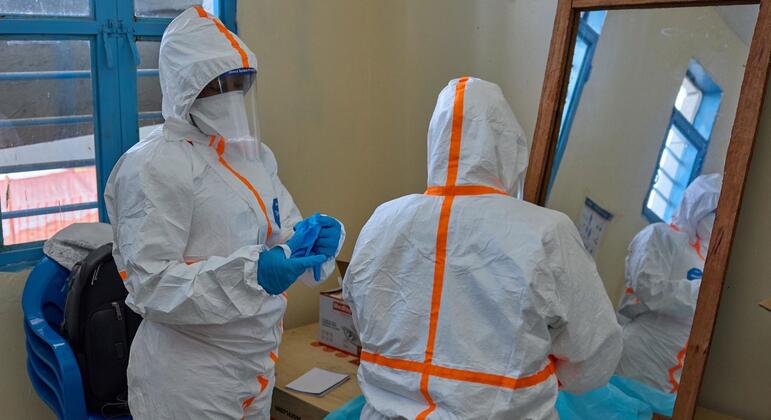
While no specific treatment exists for the current outbreak of the rare Bundibugyo Ebola virus strain, three vaccines are in development. Ghebreyesus reported 344 confirmed cases and 60 deaths in the DRC. The number of suspected cases, which exceeded 1,000 the previous week, has been reduced to 116 due to intensive efforts by response teams. The epicenter of the outbreak is the eastern Ituri province, with cases also appearing in North and South Kivu provinces. This situation unfolds amidst ongoing violence from armed groups, other health threats like malaria, and critical humanitarian needs. In Bunia, the capital of Ituri, three Ebola treatment centers with a total capacity of 80 beds are operational. Treatment units have also been established in five other regional towns, with more planned.
Risk Assessment and Recovery
In Uganda, there have been 15 confirmed cases and one confirmed death, including a Congolese national who was infected in the DRC and later traveled to Uganda. An American citizen infected in the DRC is currently receiving treatment in Germany. The WHO’s risk assessment remains unchanged: very high at the national level, high at the regional level, and low at the global level. Six individuals in the DRC and two in Uganda have so far recovered, demonstrating that survival from Ebola is possible with proper care and early medical intervention.
Intensifying Response Efforts
Ghebreyesus emphasized that enhancing laboratory and diagnostic capacity is a crucial priority for a swift response. Contact tracing efforts have been hampered by security concerns, displacement, and population movements. He noted that the current tracing rate needs to exceed 90% to effectively contain the outbreak. The WHO also called for the lifting of travel restrictions that disrupt supply chains and impede response efforts, recommending exit screenings at airports, ports, and border crossings.
Building Community Trust
Highlighting the vital importance of building trust with local communities to control the outbreak, Ghebreyesus stated, “Community mistrust is a serious impediment. Some community leaders believe Ebola is not real.” Despite the absence of a cure, the WHO and its partners are working to accelerate clinical trials. The second meeting of the medical network established post-COVID-19 discussed strengthening diagnostics, supporting clinical trials, and speeding up the response. “While vaccines and treatments will be a great help, the key to ending this outbreak is not biomedical; it is leadership, ownership, partnership, and trust,” he added.
Commitment to Long-Term Health
The DRC has faced 16 previous Ebola outbreaks, and Ghebreyesus expressed confidence that this one will also be stopped. However, he stressed that true success lies in preventing future recurrences and addressing broader health needs. “If the people of Ituri survive Ebola only to die from malaria, malnutrition, pneumonia, diarrhea, HIV, or diabetes, we will not have truly helped them,” he remarked. The WHO and its partners reiterated their commitment to ending the outbreak under the leadership of DRC authorities. “When the outbreak is over, we will continue to support the government and local communities to build the health and humanitarian services they need and deserve,” he concluded.