
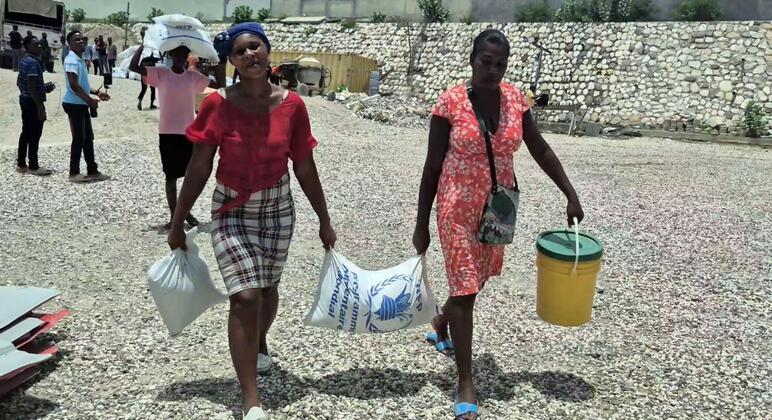
The UN Women agency announced the opening of a new safe house in Haiti, designed to offer protection, psychosocial support, and rebuilding assistance to survivors of escalating gang violence. Marie Goretti Nduwayo, a UN Women representative in Port-au-Prince, stated that gang violence, which previously was confined to the capital, has now spread nationwide, displacing thousands and causing profound trauma, particularly for women and girls. She reported a 163% increase in sexual violence in 2025 compared to the previous year, affecting approximately 1,670 women and nearly 200 girls. UN Women is collaborating with authorities to provide life-saving aid and support the rebuilding of lives for all women and girls in Haiti. This state-supported safe house marks a significant step in combating gender-based violence.
Global Competition Heats Up for Critical Minerals
A new global race is emerging around ‘critical minerals’ as nations strive to build cleaner energy systems and expand access to digital technologies. These scarce commodities, including ‘rare earths’ which are difficult to mine in sufficient quantities, are essential for everything from electric vehicles and batteries to semiconductors and data centers. A recent report by the UN Conference on Trade and Development (UNCTAD) indicates that demand for minerals like lithium, graphite, copper, cobalt, and nickel will surge in the coming decades, with lithium demand alone projected to increase by over 350% by 2040. However, the challenge lies not only in rising demand but also in supply control, as production and processing are concentrated in a few countries. In 2025, the Democratic Republic of Congo produced nearly three-quarters of the world’s cobalt, while China leads in graphite production and the processing of many critical mineral resources. Consequently, governments are increasingly adjusting trade policies to ensure supply security, bolster domestic industries, and reduce reliance on foreign markets. Since 2020, approximately 100 export-related measures, including taxes, licensing requirements, and export bans, have been introduced globally. For developing countries rich in mineral resources, this shift presents both opportunities and risks. While increased demand can attract investment and create jobs, UNCTAD notes that many countries continue to export raw materials, with higher value-added processing occurring elsewhere. As international partnerships rapidly expand, the report suggests that the next phase of the energy transition will depend not only on access to critical minerals but also on whether countries can translate their mineral wealth into broader economic development.
UN Agencies: EU Pact Could Strengthen Refugee Protection
The UN Refugee Agency (UNHCR) and the International Organization for Migration (IOM) welcomed the entry into force of the European Union’s Pact on Migration and Asylum. The agencies view this as an opportunity to move beyond crisis-driven responses and establish a more predictable and coordinated approach to migration and refugee protection across Europe. According to the UN, the reforms could make asylum systems more efficient and coherent, reducing backlogs and providing refugees and asylum seekers with greater certainty and faster access to protection. IOM Director General Amy Pope emphasized, ‘The priority is to translate the reforms into practical outcomes for states, communities, and people on the move.’ UN High Commissioner for Refugees Filippo Grandi called the pact a ‘significant step in the right direction,’ adding that its implementation must ensure access to protection, respect human rights, and support safe returns for those without a right to asylum. UNHCR and IOM highlighted measures such as stronger legal aid, early identification of vulnerable individuals, and new monitoring mechanisms at external borders. They stressed that the success of the reforms in delivering fair and humane outcomes will depend on their implementation.