
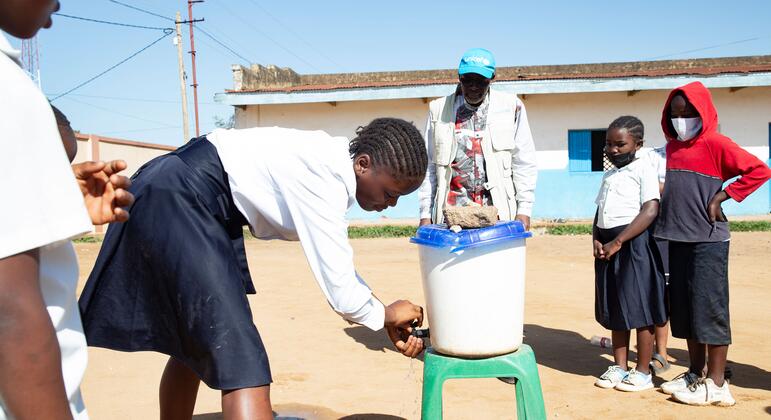
In the Democratic Republic of Congo’s (DRC) Ituri province, at least seven civilians were reportedly killed in villages in the Mambasa region on Sunday. This attack follows weeks of escalating violence in the province, with May alone seeing over 170 deaths. Conflict persists in North and South Kivu provinces, where armed clashes are preventing access to farmlands and hindering humanitarian and health workers amidst a spreading Ebola outbreak. As of May 31, authorities reported 324 confirmed cases and 48 deaths, with at least six recoveries.
The UN continues its support to Congolese health authorities, including establishing Ebola treatment centers, providing daily meals to patients and frontline workers, transporting medical supplies, and reinforcing surveillance. The UN Office for the Coordination of Humanitarian Affairs (OCHA) also highlighted a positive development: the DRC government reopened the airport in Bunia, the capital of Ituri province. The airport had been closed to commercial flights since May 23, though humanitarian cargo and UN Humanitarian Air Service (UNHAS) flights were exceptionally permitted. Meanwhile, in Uganda, confirmed Ebola cases rose to 11 by June 1, with two deaths, according to the World Health Organization (WHO). Some cases are linked to cross-border transmission from the DRC.
Aid Reaches Millions in Darfur Amidst Escalating Violence
Despite increasing insecurity, access restrictions, and severe funding shortfalls in Sudan, UN agencies and humanitarian partners are continuing to deliver aid across the country as the humanitarian crisis deepens. In April alone, over three million people received food assistance, with nearly 800,000 in areas facing or at risk of severe hunger. In North Darfur state, almost half a million displaced people in Tawila, home to the largest displaced population in Sudan, received emergency food and nutrition support.
Intercommunal Violence Intensifies
Concurrently, intercommunal violence continues to escalate in the Darfur region. Clashes in parts of Central and West Darfur reportedly led to dozens of deaths over the weekend, with new unrest spreading to additional communities. In South Darfur, drone strikes were also reportedly carried out in areas including the town of Kabum and parts of the state capital, Nyala. The UN urges all parties to protect civilians and civilian infrastructure and to ensure safe and sustained humanitarian access for those in need.
Aid Convoys Delayed at New Checkpoint in Gaza
The United Nations expressed concerns on Tuesday about new obstacles affecting aid distribution in Gaza, warning that recently implemented Israeli inspection procedures are slowing the entry of life-saving supplies into the war-ravaged territory. Addressing reporters at a regular briefing in New York, UN spokesperson Stéphane Dujarric stated that Israeli forces have begun rerouting UN aid convoys to a new route and checkpoint to reach the Kerem Shalom/Kerem Abu Salem crossing, which is currently the sole cargo entry point for humanitarian operations. According to the UN Office for the Coordination of Humanitarian Affairs (OCHA), convoys faced significant operational challenges over the past two days, including delays, congestion, equipment malfunctions, and slow inspection procedures. “As a result, only a fraction of the supplies planned for collection at the crossing could be retrieved,” Dujarric said. The closure of the Zikim crossing in northern Gaza for a second week further compounds the difficulties. UN agencies are in discussions with Israeli authorities to ensure smoother access to crossings around Gaza and reopen additional routes for humanitarian deliveries.
West Bank Update
Dujarric also touched upon the situation in the occupied West Bank, where Israeli forces have extended a military order that seals three refugee camps in Jenin and Tulkarm. Over 33,000 displaced Palestinians from these camps have been unable to return since January 2025, according to UNRWA, the UN agency for Palestine refugees. The latest order extends their displacement until at least July 31. “We call for the lifting of movement restrictions and other policies that cause or prolong displacement or prevent access to essential services and livelihoods,” Dujarric stated.
Nicaragua: Human Rights Chief Calls for Investigation into Death of Indigenous Leader in Custody
UN human rights chief Volker Türk has called on Nicaragua to conduct an immediate, impartial, and effective investigation into the death of prominent Indigenous leader and activist Brooklyn Rivera while in custody. Rivera’s relatives were informed on May 30 that he had died after more than 32 months in state detention. Rivera had attended the annual UN forum on indigenous issues in May 2023 and was subsequently barred from returning to Nicaragua by authorities. UN Human Rights Office (OHCHR) spokesperson Marta Hurtado told reporters in Geneva that he had been recognized as a victim of retaliation for his cooperation with the UN, according to the UN Secretary-General’s 2024 and 2025 reports on such reprisals. Rivera had secretly returned to Nicaragua in September 2023 and was arbitrarily detained. “Despite demands, authorities refused to acknowledge his fate and whereabouts until his death, which amounts to a forced disappearance,” Hurtado stated. “The conditions of detention over the years, whether he had access to adequate medical care, and the full sequence of events leading to his death remain unclear.” She recalled that the OHCHR has presented a report over the years on serious allegations of torture and ill-treatment of detainees in Nicaraguan prisons. The Office has recorded three further cases since last August that resulted in deaths in custody, appearing to be linked to inadequate detention conditions and insufficient medical care.