
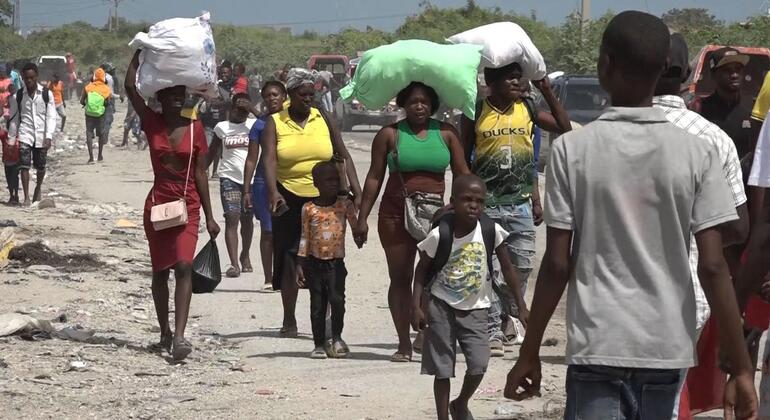
Cité Soleil, a densely populated slum in Haiti’s capital, Port-au-Prince, is witnessing escalating violence, prompting humanitarian workers to deliver life-saving aid. The nation continues to grapple with years of insecurity, profound poverty, economic collapse, and political turmoil following the assassination of its president.
The United Nations World Food Programme (WFP) shared the harrowing experiences of two women fleeing the conflict. Anidette Saint Fleur from Quartier Blanchard recounted, “There were gunshots everywhere. Then we lit a fire nearby and fled. We couldn’t go back because the area is full of gangs. We only managed to grab our identity papers and escape. We haven’t returned since. I always keep a bag ready, just in case. When I hear heavy gunfire, I grab my bag and run with everyone else. I had just paid my rent and we had to flee. Now we have nothing – no money, no shelter – and we don’t know when we can return. Please help us. Not having a place to sleep and no food for the children is the hardest thing for us right now.”
Dorlean Boudin, a resident of Sarthe, Carrefour Vincent, near Cité Soleil, described the dire situation: “There were men who set houses on fire with people inside, chopping them up, beheading them, shooting them, killing them. If you had a shop, they looted everything. The situation was already very difficult for me, I had very little money. I couldn’t buy food because I had to save money for emergencies, to escape. We went without eating to cover transportation costs to flee. I need to set up a small business to raise the children. I need help because we don’t have food and water to feed them, and to buy water.”
The WFP has delivered emergency food assistance to 8,500 newly displaced individuals from Cité Soleil. Nine WFP-supported schools, serving approximately 12,000 students, have been forced to suspend meal distributions. Janvier Muhima from the WFP confirmed that food supplies, including rice, legumes, oil, and fortified flour, are being provided for the displaced.
Nationwide, over 1.4 million people, more than 12% of the population, have been forced to abandon their homes, primarily due to criminal violence. The capital, Port-au-Prince, has become the epicenter of the violence, with gangs believed to control up to 90% of the city. There are reports of increasing recruitment of children into gang ranks, with some estimates suggesting children now constitute 30-50% of certain gangs.