
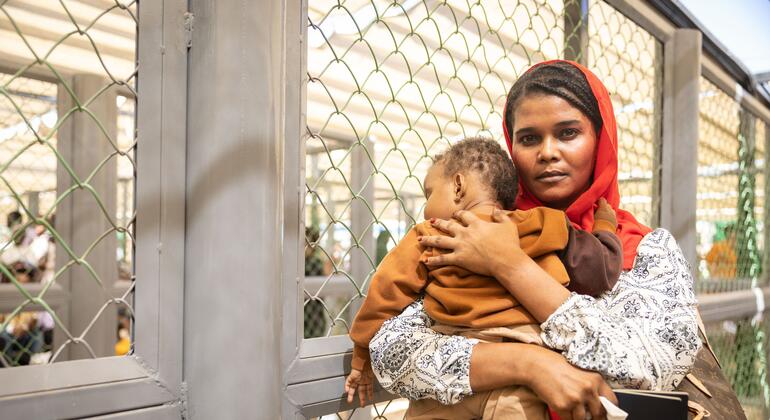
Approximately 850,000 Sudanese individuals have sought refuge in Egypt, fleeing the intense conflict in their homeland. Among them is Nawal, a widowed mother of six whose youngest child suffers from chronic illness. She, like many others displaced by the conflict now entering its fourth year, struggles to meet her children’s basic needs.
Support for Refugees and Asylum Seekers Under Threat
Christine Beshay, a spokesperson for UNHCR in Egypt, stated that the UN Refugee Agency provides assistance to new Sudanese arrivals, including registration and refugee status determination processes, as mandated by the Egyptian government. Beyond protection services, UNHCR offers healthcare, education, child and psychosocial support, and cash assistance to the most vulnerable families like Nawal’s.
However, Beshay highlighted a significant funding shortfall impacting the support refugees and asylum seekers receive. This crisis stems from recent shifts in funding for humanitarian and development agencies, coupled with a surge in the refugee population in Egypt, which has exceeded 1.1 million, a substantial increase from 300,000 three years ago.
Reduced Funding Squeezes Per Capita Aid
Beshay noted that funding levels for 2025 remain nearly identical to 2022, prior to the outbreak of the Sudan crisis. This has led to a drastic reduction in per capita funding, falling from $11 per refugee per month to just $4. Even the current $11 is insufficient to cover all refugee needs, Beshay explained, emphasizing that the doubling of the refugee population combined with funding shortfalls has diminished the aid provided.
Programs at Risk of Suspension
Nawal and others who benefit from UNHCR’s cash assistance program receive approximately 1,530 Egyptian pounds (about $29) per month. Nawal also works part-time. This amount, however, only allows her to send three of her children to school, with her eldest son having to drop out to care for his siblings while she works. Beshay mentioned that UNHCR generally prioritizes providing cash assistance to refugee families, offering them the dignity of choosing how to meet their needs, whether for rent, food, education, or healthcare.
The cash assistance program has only secured two percent of its required funding, forcing a reduction in the number of beneficiary families by more than half, Beshay reported. She added that the program faces the threat of closure within the next few weeks if additional support is not secured. Beshay pointed out that many families receiving cash assistance are female-headed and often have school-aged children. If the support ceases, mothers will face agonizing decisions between feeding their children or sending them to school. She also noted the difficulty for single mothers to secure stable income through regular employment to support their families.
Education and Employment Opportunities Offer New Hope
UNHCR collaborates with various organizations to support refugees. Beshay indicated positive developments with the private sector, as companies are beginning to offer support through corporate social responsibility projects, providing educational or employment opportunities. This, she added, opens new horizons for refugees and asylum seekers to acquire new skills that they can utilize when they are able to return to their homelands safely and with dignity.
* Nawal’s first name is used to protect her identity.