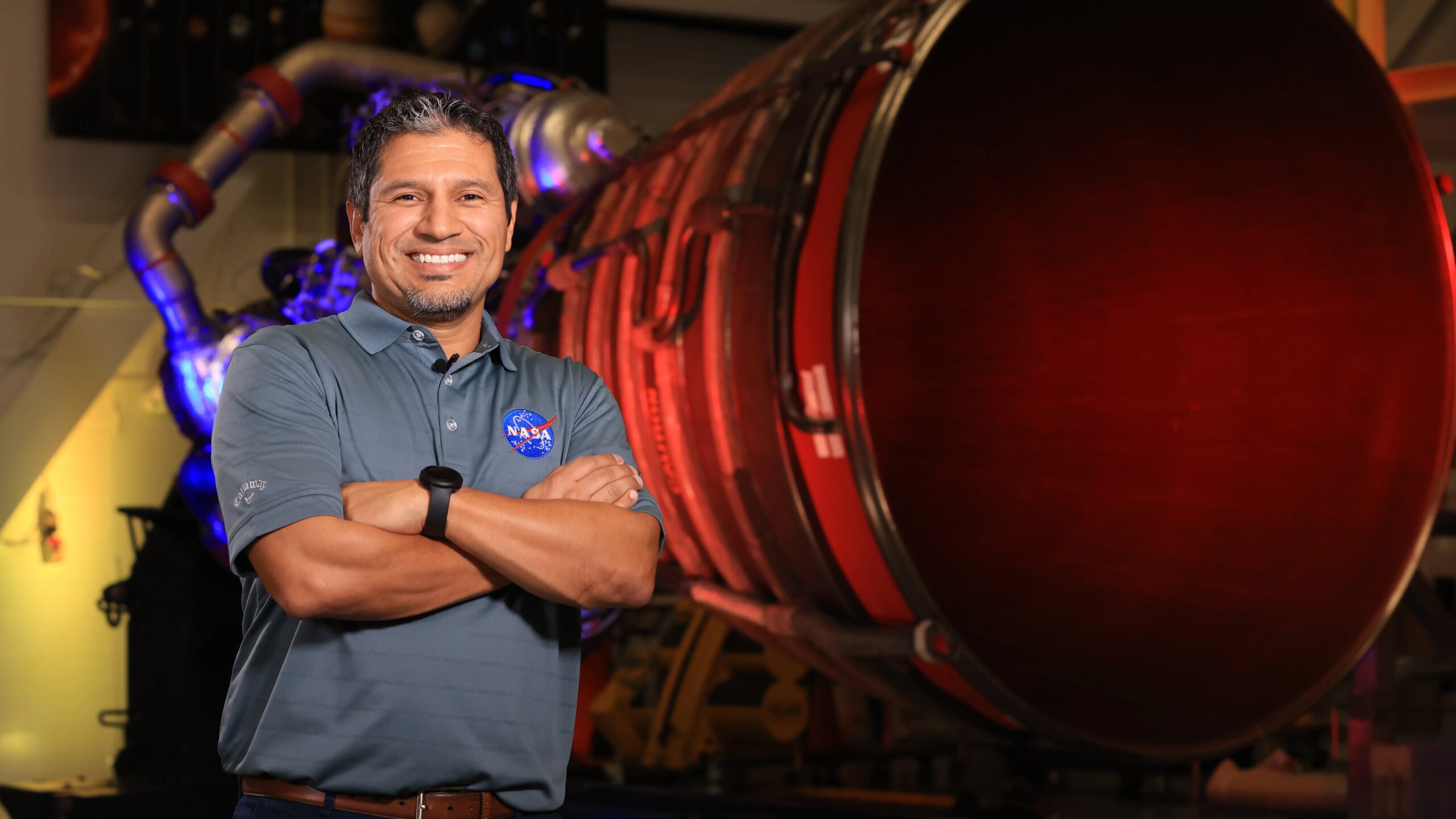

Scott Wray’s journey into spacewalk expertise began around age six, inspired by a tent that resembled a lunar lander. Now, after over 16 years at NASA’s Johnson Space Center, Wray takes pride in shaping spacewalk training across three eras of human spaceflight.
His childhood fascination with space evolved into a passion for engineering, fueled by building LEGOs, assembling aircraft models, and devouring aviation design books. A pivotal experience at Space Center Houston, including meeting NASA Flight Director Gene Kranz, solidified his ambition to work for NASA. “I was so inspired by the facilities and the incredible history here, I knew I had to work here someday,” Wray stated.
During his aerospace engineering studies at Embry-Riddle Aeronautical University, Wray joined NASA’s Co-op Program. He observed astronauts training for spacewalks (Extravehicular Activity – EVA) for the Space Shuttle and International Space Station programs. While assisting a team repairing a tear in the thermal blanket of the Space Shuttle Atlantis, he connected with the EVA group, defining his career path. “I enjoy putting on the gloves, taking things apart, and coming up with creative solutions – that’s what drew me to EVA,” he added.
An earlier stint as a dog sled guide in Alaska also proved formative. Wray learned to improvise with available tools and repair a sled far from home. These skills proved invaluable when facing challenges with the EVA team at Johnson. “There have been times when our hardware or vehicle has failed, and we’ve had to come up with a real-time solution, and those have been some of the best moments for our team,” he said. “It shows how we integrate the human into human spaceflight.”
Following graduation, Wray joined Johnson as a full-time EVA team member, working under various contracts before transitioning to a civil servant position in 2021. Initially, he served as an EVA instructor for tools and hardware. As NASA’s astronaut corps diversified, Wray developed new EVA techniques and tools adaptable to each crew member. “This meant creating a curriculum that leveraged individual strengths while enhancing teamwork and resilience,” he explained.
He also served as a flight controller for shuttle and space station EVAs. Recalling an EVA mission in 2013 that was cut short due to astronaut Luca Parmitano’s spacesuit helmet filling with water, Wray noted, “That event taught me that despite operating a spacesuit for decades, there are failure modes we haven’t anticipated yet.” He emphasized the critical need for vigilance, adaptability, and continuous learning, given that lives depend on it in human spaceflight.
In recent years, Wray’s responsibilities have centered on preparing Artemis crews for lunar missions. As the current Artemis EVA Training Lead, he oversees the development of training flows designed to ready astronauts for surface operations on the Moon—a challenge not faced in over 50 years.
While many astronauts have station training or have completed EVAs, Wray highlights that the skills required for lunar exploration will differ. “It’s going to be a completely new spacesuit, new tools, a new environment,” he said. “And instead of moving hand-over-hand like we do on the station, they’ll be walking.” He added that training must extend beyond these fundamental spacewalking techniques. “Our curriculum integrates geology; it covers things like impact craters, volcanology, sample collection, and field planning,” he explained. “This aims to make astronauts effective field scientists while mastering complex EVA operations.”
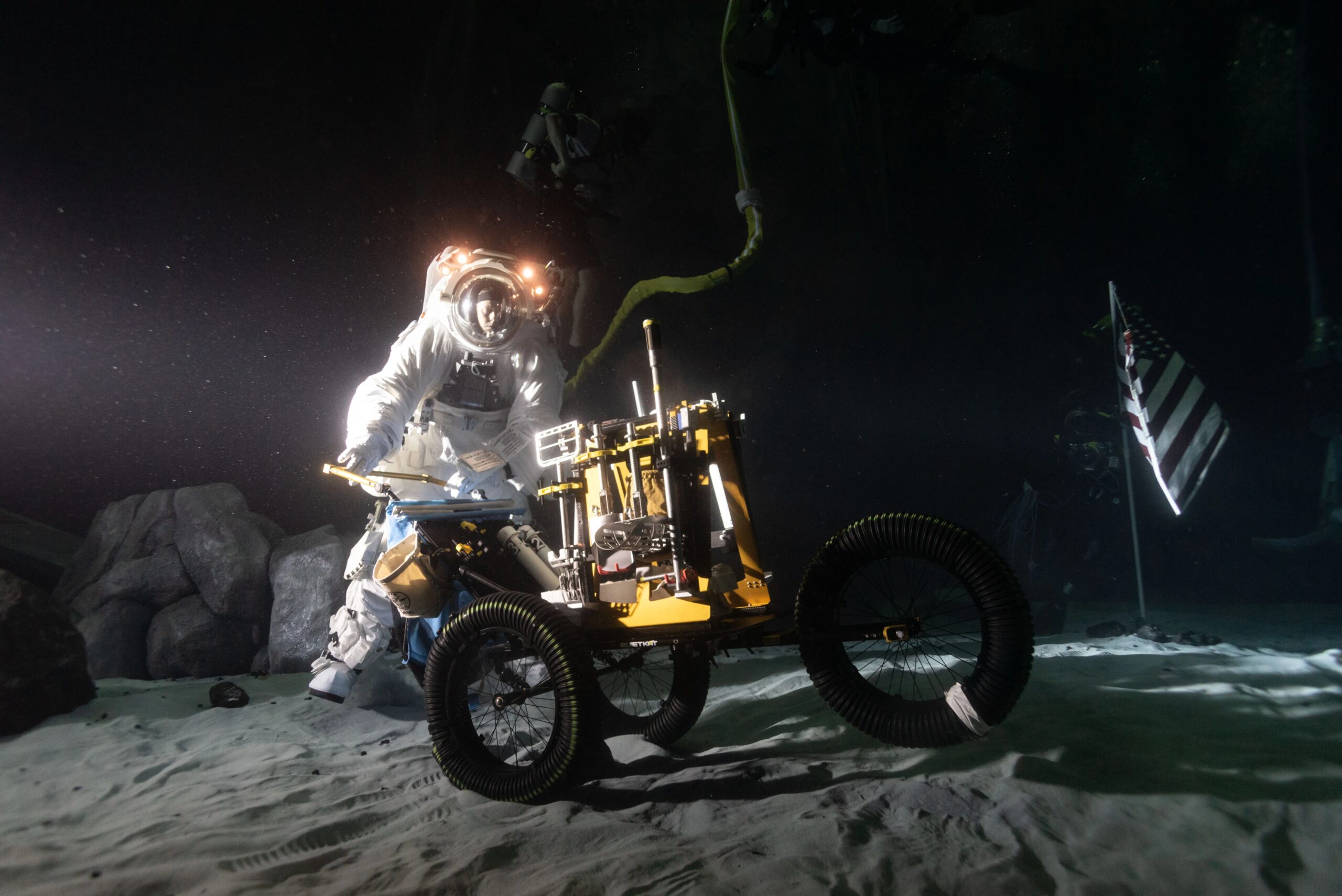
To hone these skills, the team utilizes various training environments. These include the Neutral Buoyancy Laboratory, NASA’s flagship EVA training facility since 1997, as well as a partial gravity offload system, virtual reality, lighting labs simulating the challenging lighting conditions of the Moon’s South Pole, field sites for geology training and sample collection, and suit simulators preparing them to respond to contingency scenarios.
Wray stated, “Leading this effort as the EVA training lead allows me to ensure that every element, from science to operations, is integrated into a program that will prepare astronauts for success on the Moon and beyond.” He added, “This effort is more than preparation; it is the foundation for future exploration and a stepping stone to Mars. It’s incredibly rewarding to know our work will help shape the next era of human spaceflight.”
Amidst these complex preparations, Wray also finds time for new pursuits outside the office. His daughter encouraged him and his wife to take acting classes at a local fine arts studio, leading to Wray’s stage debut in “Rock of Ages.” He took on the role of William Shakespeare in this year’s production of “Something Rotten.” “I never thought I’d have this much fun onstage with acting, singing, and dancing,” he remarked. “It’s been so rewarding to be involved in activities our daughter loves and in the community we’re divided into.”
Offstage, Wray expressed deep gratitude for playing another role: being part of missions that will conduct meaningful scientific work on the lunar surface. “I’ve dreamed of returning to the Moon since I was a child,” he said. “Artemis isn’t just about going back; it’s about shaping the future. When we choose to push the boundaries of exploration, the advancements we make not only expand knowledge but create lasting benefits for all humankind.”