
Bübyusara Ryskulova, an honorary president of the crisis center ‘Sezim’ (meaning ‘to feel’), has dedicated over three decades to aiding women and children who are victims of violence. She notes significant progress in reinforcing protections against domestic violence in Kyrgyzstan, while acknowledging ongoing challenges.
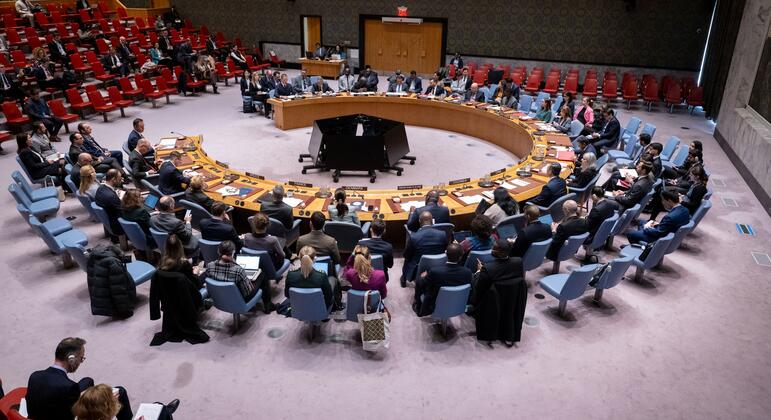
Speaking to UN News at the recent session of the Commission on the Status of Women (CSW70) at the UN Headquarters in New York, Ryskulova stated, “My work has been connected to the topic discussed at this session for over 30 years.” She was the sole representative from civil society within a high-level delegation comprising the deputy prime minister, ombudsman, deputy prosecutor, Supreme Court, and various ministries.
“It is a chance for me to see how other countries work,” Ryskulova remarked. “You hear a lot of criticism at home, but still, comparison puts things into perspective.”
“I knew how deep our problems were”
Ryskulova described her entry into this field as “accidental,” with a pivotal visit to the U.S. in 1998 serving as her inspiration. Through an exchange program, she studied domestic violence prevention methods across seven states.
“It was the first time I saw how a support system actually works,” she said. “Nobody spoke openly about these issues back home. When they started teaching us what a public institution is, what an NGO [non-governmental organization] is, I was learning like a schoolchild. Everything was new and very interesting. But even then, I knew how deep our problems were.”
“Setback” in Women’s Rights
Sezim, one of the first crisis centers in the region, was established in 1998 when the concept of assisting violence survivors was novel for the country.
Ryskulova shared that even today, discussing domestic violence openly can remain difficult. “There was a significant increase in religiosity in the early 1990s, and sometimes people interpret many issues through a religious lens,” she explained. “For example, in the village where I come from, there is one school and two mosques. So, it can still be difficult to talk about violence, and there has been a certain setback in some areas of women’s rights.”
Challenging Beginnings
The initial days were incredibly tough, especially when the first helpline was launched. “When we opened the helpline, we just sat there and waited. Would anyone call? And for a long time, nobody did,” she recalled. “When the first call finally came, they said, ‘pick up.’ I had almost no experience. My hands were shaking, but that’s how we started.”
Progress is Undeniable
The progress is undeniable, with the professional landscape gradually transforming. While there were hardly any practicing psychologists in the country in the early 1990s, numerous universities now train them.
Following a civil society campaign and a major petition drive, Kyrgyzstan became one of the first post-Soviet countries to adopt a law on domestic violence in 2003, with legal updates in 2017.
“We really cannot complain on a legal level,” Ryskulova stated. “However, the law is one thing, and its implementation is another. So now we work more at the local level, protecting specific individuals. We have a shelter, and our specialists have been working for over 30 years. I myself obtained my second degree as a practical psychologist, and today I often represent the interests of victims in court. Our law allows this through a power of attorney, even if you are not a lawyer.”
She notes that sometimes high-profile cases help advance the system. “In recent years, our organization has handled about 40 cases, and decisions have been in favor of the victims in almost 90% of them. These were very difficult cases, including murders and rapes. We work on them, and then we raise public awareness. If a woman does not want publicity, we protect her anonymity completely.”
Combating Threats Like Sexual Slavery
International cooperation, including with UN agencies, has been instrumental in developing crisis centers in Kyrgyzstan, with the International Organization for Migration (IOM) being one of the earliest partners.
“It was there that I first heard the term ‘sexual slavery,'” she said. “We then opened a helpline specifically for this issue. I remember one of the first girls was underage and pregnant. I met her myself at the airport. She said she didn’t want to live, that she would commit suicide if she had a baby. We had to stay by her hospital bed to prevent her from harming herself.”
Helping Survivors Requires Daily Effort
Today, Sezim continues to collaborate with UN agencies such as the UN Refugee Agency (UNHCR) and UN Women.
“This is very important for us [for expertise sharing, training of specialists, and joint projects],” Ryskulova explained. “Platforms like the Commission on the Status of Women offer an opportunity to see what is happening in the world and understand what we still need to learn.”
Despite decades of work and visible progress, she is certain: helping survivors still requires a daily effort. “Seminars and training are important, and prevention is important,” she concluded, “but if even one person who has been a victim remains unprotected, then we have not yet done everything we need to do.”