
Despite widespread acknowledgment of the Syrian people’s determination to rebuild their nation following the overthrow of the Assad regime in December 2024, experts caution that sustained international engagement is crucial to keep the transition process on track amidst ongoing humanitarian challenges.
UN Expert Team on Rule of Law and Sexual Violence in Conflict
The UN Expert Team on Rule of Law and Sexual Violence in Conflict is working to support Syrian national institutions in investigating and prosecuting conflict-related sexual violence, while also strengthening their rule of law systems. Speaking to UN News, Judicial Affairs Officer Sofia Candeias highlighted both the progress made and the significant challenges that remain, particularly in combating wartime sexual violence, which was used extensively and systematically during Syria’s brutal civil conflict.
“It’s remarkable that Syrians have been able to put all of this in place in one year,” Candeias stated. Yet, beneath this progress lies a far more fragile reality, characterized by weakened institutions, widespread trauma, and a race against time to translate commitments into meaningful accountability.
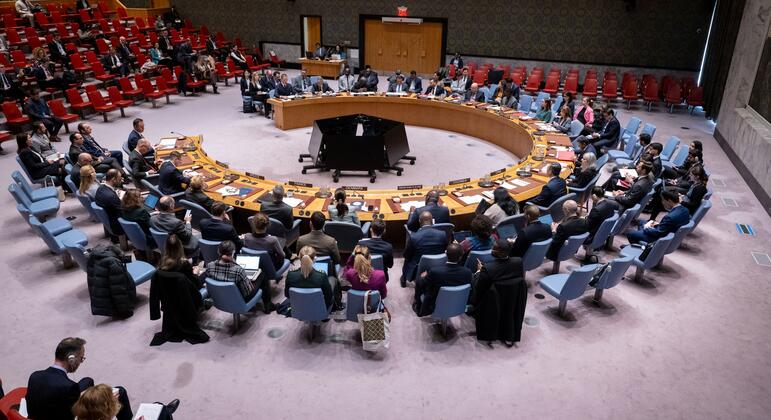
The UN continues to support a Syrian-led, Syrian-owned political process, in line with Security Council resolutions 2254 and 2799.
Building from Scratch
Established by Security Council resolution 1888 in 2009, the UN Expert Team has been active in Syria since the fall of the Assad regime in December 2024. A joint initiative of the Department of Peace Operations (DPO), the UN Office of Human Rights (OHCHR), the UN Development Programme (UNDP), and the Office of the Secretary-General’s Special Representative on Sexual Violence in Conflict, the team’s mandate is to support national institutions in their rule of law response to sexual violence and conflict.
The team has engaged three times, working in close collaboration with key Syrian bodies, including the National Commission for Transitional Justice, the Commission for Missing Persons, various ministries, and civil society organizations. This approach, providing technical support while building national ownership, plays a central role in ensuring that justice efforts are sustainable.
“Civil society organizations are the backbone of transitional justice. They are also the only way to really listen to victims,” Candeias said. Syrian civil society groups have been documenting human rights violations for years, which can form the evidential basis for future prosecutions.
Systematic and Incomprehensible
One of the biggest, yet least visible, challenges facing Syria’s justice process is the true scale of conflict-related sexual violence. “The honest assessment is that we do not know, and probably never will know, the full scale of the problem,” Candeias said. What is known is deeply disturbing. Sexual violence was reportedly used extensively and systematically throughout the conflict in detention facilities, at checkpoints, and during displacement. It was added that this was not incidental but intentional.
“There are many more cases than what has been documented,” Candeias noted, pointing to stigma as a major barrier preventing victims from coming forward. “This was a systematic attempt and a deliberate tactic targeting and using sexual violence to humiliate and punish civilians,” she emphasized.
Men and Children Also Targeted
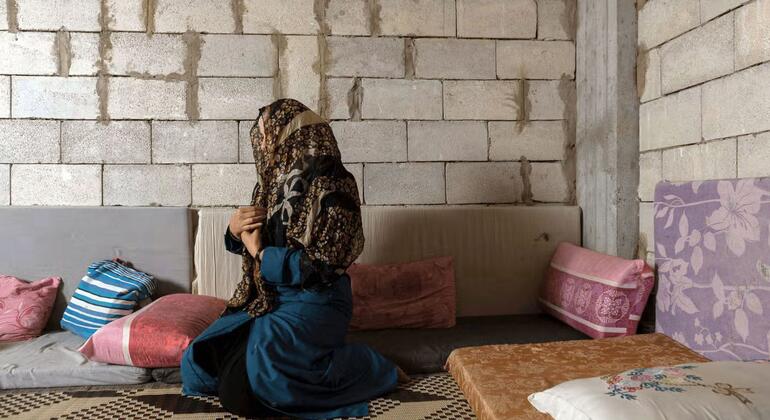
While women and girls are disproportionately affected, men and boys have also been heavily targeted, particularly in detention. One Syrian partner organization reported that 98 percent of detained men and boys in their dataset experienced sexual violence; however, even this figure may underrepresent the reality, as it only accounts for documented cases.
Silence Reigns
Stigma is recognized as the greatest barrier to justice. It operates on an internal level, where victims grapple with shame; within communities, where disclosure might result in rejection; and on a social level, where silence often prevails. Consequently, many victims never speak out.
To address this, the UN and its partners stress the need to create safe conditions where victims can access medical care, psychosocial support, and legal aid without fear of stigma or reprisal. However, what constitutes a safe space varies among communities, making local engagement critical.
Progress Without Capacity
Despite institutional advancements, Syria’s capacity to deliver justice remains severely constrained. Years of conflict have eroded the country’s medical, forensic, and justice systems. Without adequate forensic capacity, evidence cannot be properly collected or preserved. Without trained investigators and prosecutors, cases cannot move forward. Without psychosocial support, victims are less likely to come forward.
“What we want is for citizens to be able to exercise their rights, because a victim is not just a victim, but also an actor, a citizen,” Candeias said.
A Narrowing Window
Exacerbating these challenges is a decline in international funding. Support for civil society organizations—many of which are leading documentation efforts and providing frontline assistance to victims—has decreased over the past year. Funding for national institutions also remains limited.
For Candeias, this trend is deeply concerning. “So much progress has been made in one year, now technical support needs to follow,” she stated. “The foundations have been laid by Syrians, but we need more services.” If resources do not materialize, evidence could be lost, victims could withdraw, and nascent trust in new institutions could erode, setting accountability efforts back for years.
A Critical Juncture
Syria now stands at a critical juncture. Its rapid progress in transitional justice offers a rare opportunity to pursue accountability after years of conflict. However, this opportunity remains fragile, contingent on sustained support. “Now is the time to invest. We cannot let what they have put in place fail,” Candeias urged.