
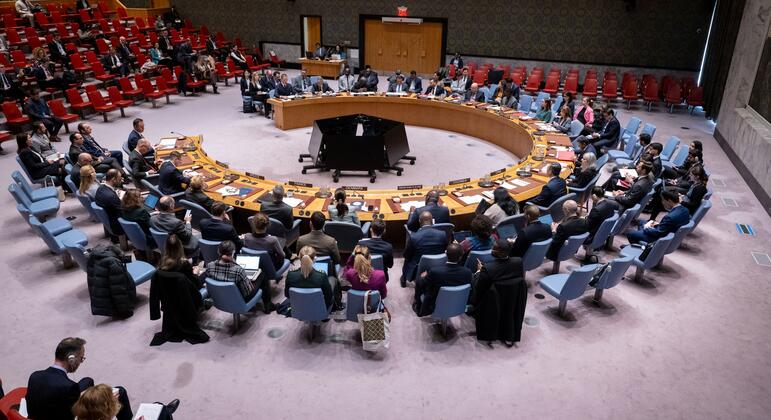
The UN Security Council convened to discuss the future of the International Residual Mechanism for Criminal Tribunals (IRMCT), an entity established in 2010 by the Council. The IRMCT was tasked with continuing the essential functions of the International Criminal Tribunal for Rwanda (ICTR) and the International Criminal Tribunal for the former Yugoslavia (ICTY) after their closure.
Addressing the Council, IRMCT President Graciela Gatti Santana stated that the mechanism is “effectively fulfilling its mandate.” She noted that with one of its final cases transferred to a national jurisdiction, only “limited but still essential tasks” remain.
“The future of the UN’s residual responsibilities towards those under its care, and indeed the future of international criminal justice, now rests with the Council,” Santana remarked.
Significant Downsizing Proposed
Gatti Santana presented a strategic plan suggesting a substantial reduction in personnel, potentially around 90%, and the transfer of certain functions, including assistance to national judiciaries and archive management, to the UN Secretariat.
However, she advocated for the retention of a small international body to oversee residual legal responsibilities such as the transfer and release of convicted persons, witness protection, and the monitoring of transferred cases.
Santana described the proposal as a balance between “principle and pragmatism,” adding that “Enduring justice does not conform to neat or definitive timelines.”
Legacy Matters
IRMCT Prosecutor Serge Brammertz supported the transfer of some non-judicial functions to the Secretariat but recommended that the execution of sentences for convicted individuals continue under international supervision.
He emphasized the importance of the IRMCT’s legacy, particularly in an era where genocide denial and the glorification of war criminals persist.
Brammertz stated, “The horrific atrocities in Rwanda and the former Yugoslavia were not random outbursts of violence,” highlighting how hate speech and propaganda lay the groundwork for violence, and underscored the archival material’s educational value.
Debate Over Archives
The future location of the tribunals’ archives emerged as a contentious issue among ambassadors on Friday.
Rwanda’s Minister of Justice and Attorney General, Emmanuel Ugirashebuja, argued for the transfer of the ICTR archives to Rwanda.
“For the survivors of the genocide against the Tutsi, the handover of the ICTR archives will be more than a relocation of records; it will represent the return of a significant part of their history,” Ugirashebuja said. Tanzania, which hosted the Rwandan tribunal for two decades, noted that its archives are already in a neutral location with modern infrastructure and broad accessibility.
Similar disagreements arose regarding the future location of the ICTY archives. Serbia offered to preserve the relevant materials, while Croatia and Bosnia and Herzegovina stressed the importance of accessibility and expressed concerns about political commitments to transparency.
Calls for Closure, Warnings Against Haste
Council members generally agreed that the IRMCT was never intended to be a permanent fixture, though views differed on the pace of closure.
Some members, including Greece, Pakistan, and Somalia, supported maintaining a “small, transitional, and efficient” structure. The United States indicated that the Council is now faced with crucial decisions to ensure the “responsible and expeditious conclusion” of the IRMCT’s work.
Russia called for further delegation of responsibilities, stating that the mechanism “continues to stubbornly cling to residual functions.”
Conversely, many delegations cautioned against rushing the process.
The representative of Colombia stated, “The objective should be the definitive and orderly closure of the Mechanism.”