
In a major urban exhibition in Baku, attendees encountered vast digital displays showcasing flood simulations, metro control systems, and virtual replicas of entire neighborhoods. The event highlighted how cities are being reshaped by artificial intelligence, digital infrastructure, and real-time data, embodying a vision many governments now refer to as the ‘city of the future.’
Smart Cities in Practice
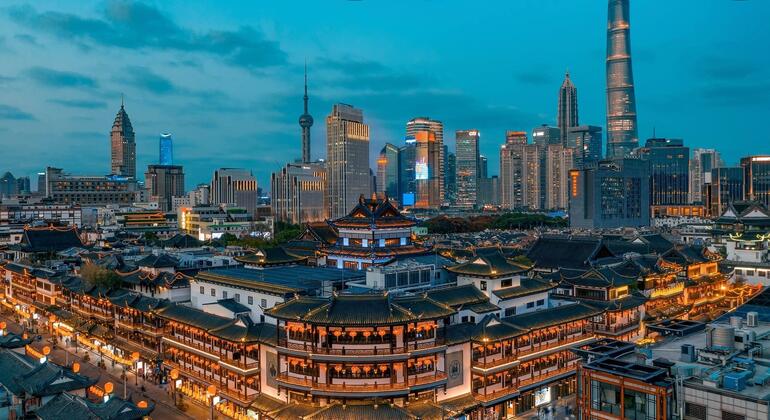
Shanghai stands out as a prime example of the scale of smart city ambitions. At the 13th session of the World Urban Forum (WUF13) in Baku, officials presented the city’s ‘One Network Unified Management’ platform. This extensive system leverages big data and artificial intelligence to integrate transportation, infrastructure, emergency response, and public services.
Shanghai is also working to bridge the digital divide, offering residents online access to over 3,500 public services through its ‘One-Stop Government Services’ portal.
The city’s transportation system provides another glimpse into the future. Shanghai Metro, one of the world’s largest with over 800 kilometers and more than 400 stations, relies on AI-driven monitoring, 5G communication, and predictive weather control technologies to enhance safety and minimize disruptions.
Many lines already operate fully automated, driverless trains. AI systems continuously monitor tunnels for cracks, water leaks, and structural weaknesses, while massive streams of passenger data are analyzed in real-time to prevent network-wide disruptions.
Perhaps the most striking example is the Lingang Starry Sky Sponge Park. Covering 54 hectares, the park combines a cosmic-themed landscape with advanced flood management infrastructure. Permeable pavements, underground filtration systems, and smart drainage enable the park to absorb, purify, and reuse up to 15,000 cubic meters of rainwater daily.
Putting People at the Center
Anacláudia Rossbach, Executive Director of UN-Habitat, a co-organizer of the Forum with Azerbaijan, warned that cities face multiple crises, including housing shortages, informal settlements, climate shocks, and rising inequality.
Rossbach stated that cities are at the forefront of climate change, conflicts, and rapid urbanization, emphasizing, “We need to use the existing technologies to the fullest.”
However, technology alone is insufficient. “The most important part of our work is that smart cities must be truly human-centered,” Rossbach added, stressing that human rights, inclusivity, and equity must remain central to digital transformation.
She also highlighted the risks of digital exclusion. During the COVID-19 pandemic, many residents in informal settlements were cut off from education, services, and remote work due to a lack of connectivity and digital access.
Who Truly Benefits?
As cities embrace AI and digital infrastructure, some researchers caution against an overemphasis on technology.
Gynna Millan, a Colombian architect and urban researcher, noted, “Most people understand smart cities as technology-driven.” She warned that technology can either empower people or become a “tool of control,” depending on how it is used.
For many cities in the Global South, particularly those with informal settlements lacking basic infrastructure or reliable internet, the question is not just whether advanced technology exists, but whether it genuinely improves daily life.
AI Comes to the City Hall
Artificial intelligence is rapidly moving from pilot projects to the daily operations of urban governance. Dmitri Atov, an advisor to the Moscow city government, stated, “AI is no longer just a buzzword; it’s a game-changer for cities.”
Yining Zhao, Project Officer at the UN International Telecommunication Union (ITU), outlined five technological trends shaping urban life, referencing statements by Dr. Okan Geray, Chair of the Steering Committee of the Global AI and Virtual Worlds Initiative:
- ‘World Models’ — AI systems simulating the behavior of cities and infrastructure under real-world conditions.
- ‘Agentic AI’ — Autonomous digital agents capable of independent planning and action.
- AI in the physical world — through robots, drones, and smart machines.
- Immersive virtual environments — digital realms for work, learning, and collaboration.
- ‘Digital twins’ — virtual city replicas used to test real-time scenarios.
Moscow operates one of the world’s largest digital twin systems, updated twice a year with aerial photography. It includes over 9,000 analytical layers used to model traffic, infrastructure, and future developments.
Risks Beneath the Surface
As cities become more connected, they also become more vulnerable. Officials in Azerbaijan emphasize that cybersecurity is now central to urban development as smart technologies expand.
Aytaj Khalafli, a representative of Azerbaijan’s state cybersecurity agency, stated, “Cyberattacks are not just a technical issue.” She believes cybersecurity must be integrated into urbanization “from the foundational stage.”
Her agency protects critical infrastructure, monitors threats, and conducts penetration tests on government systems.
Khalafli warned that transportation systems have already faced cyber incidents, adding, “If an attack occurs, chaos could erupt in the country.”
Throughout discussions in Baku, UN experts insisted that trust, transparency, and security must evolve alongside innovation.
Nicholas You, Executive Director of the Guangzhou Institute for City Innovation (China), remarked, “Trust is no longer just a luxury today; it is infrastructure.”
Smart, But For Whom?
UN officials believe the future of smart cities will not be determined by who possesses the largest data centers, the most sensors, or the fastest AI systems.
Dmitry Maryasin from the UN Economic Commission for Europe (UNECE) stated, “‘Smart’ doesn’t always mean the introduction of digital technologies or even innovation. It’s sometimes about good planning, setting priorities, and understanding how infrastructure is interconnected.”
He cited examples such as urban greening projects, the transformation of highways into public spaces, and the growth of “active mobility” prioritizing pedestrians and cyclists.
Ultimately, the question may be less about how smart cities can become, and more about for whom they are designed.