
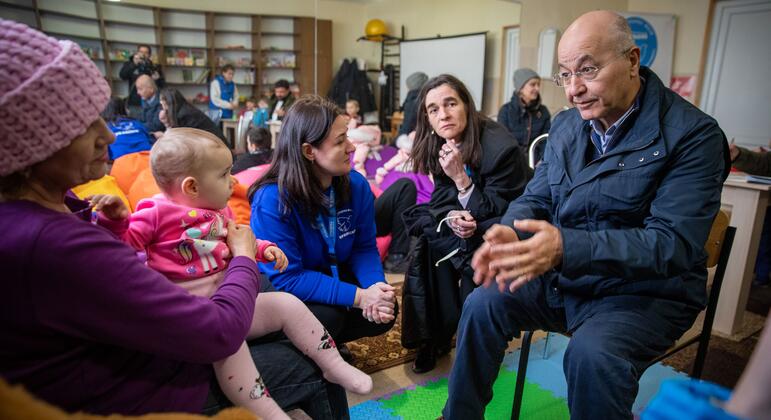
Less than a month into his tenure, the new UN High Commissioner for Refugees, Filippo Grandi, is signaling how he will lead an institution grappling with escalating crises. Grandi, who assumed office on January 1, has already visited refugee camps in Kenya and Chad, moving beyond Geneva’s conference rooms to confront the harsh realities on the ground. “The responsibility is enormous in every sense,” Grandi stated, acknowledging the magnitude of the challenge.
At 58, Grandi brings a unique perspective shaped by personal experience with displacement. Born in Italy, he witnessed the aftermath of conflict and displacement firsthand, which fueled his commitment to humanitarian work. This background informs his approach to the millions of people currently trapped in uncertain circumstances.
Emphasizing that “behind every statistic, there is a life,” Grandi highlights the inherent dignity and right to a dignified life and a better future for every individual. While this focus on individual dignity has been a recurring theme in his early months, a starker reality also emerges: the global system designed to combat displacement is under immense strain. As displacement figures soar, humanitarian funding is shrinking, forcing organizations like UNHCR to stretch limited resources to meet ever-increasing needs.
Is Ending Displacement Possible?
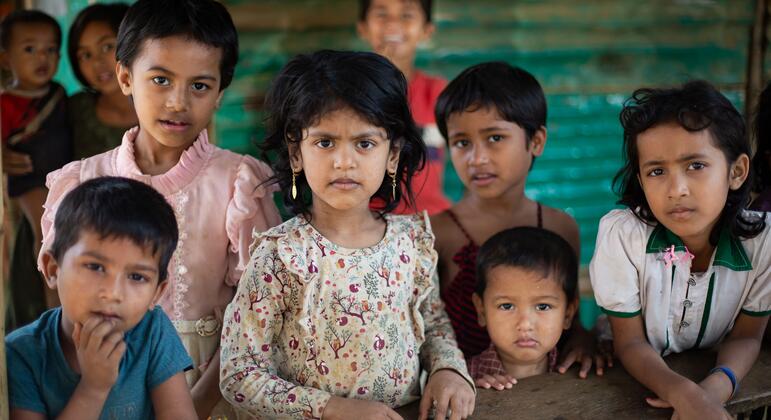
For decades, the architecture of refugee protection operated on the assumption that displacement was a temporary state. People fled, found protection, and returned home when it was safe. Grandi asserts, “Being a refugee should not be a life sentence; it should be a temporary situation.” However, as conflicts persist and political solutions falter, this assumption has quietly eroded. Today, approximately two-thirds of refugees are in what humanitarian agencies term “protracted displacement” – living for five, ten, or even twenty years or more without a durable solution. Entire childhoods are spent in camps. Generations grow up without ever seeing the homes their families fled. The UN Refugee Chief does not mince words: “This is not an acceptable situation. It is a violation of the fundamental human right to a dignified life.”
Ambitious Plan
Grandi’s plan is ambitious. He aims to halve the number of protracted displaced people dependent on humanitarian aid within a decade, a goal that extends far beyond the capacity and resources of his own agency alone. “I know and fully understand that this is beyond UNHCR’s present means and capabilities,” he admits. The strategy relies on achieving something the humanitarian system has long struggled with: moving beyond immediate relief to economic inclusion. Grandi argues that refugees should be able to contribute to the societies hosting them through work, rather than remaining dependent on aid. This will require a broad coalition, including development banks, private investors, donor governments, and host countries, many of which face their own economic challenges. It also necessitates a shift in political will at a time when many wealthy nations are tightening borders rather than expanding opportunities.
The Weight of Hosting
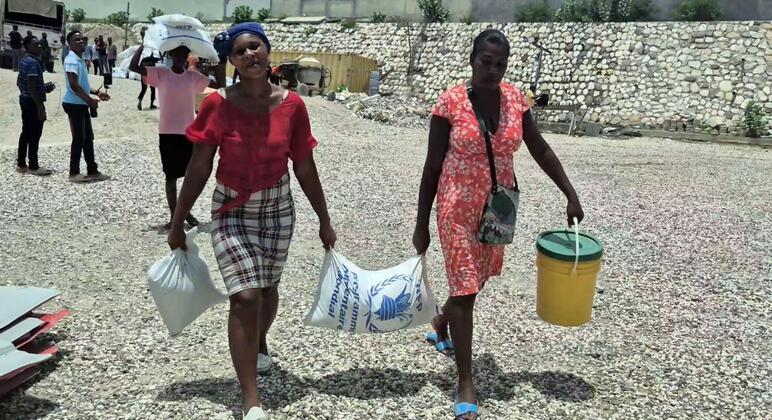
One of the enduring paradoxes of the refugee crisis is that it is largely borne by countries least equipped to handle it. “We need to assist the host nations, which are mostly low- and middle-income countries,” Grandi states. From Colombia to Uganda, Chad to Bangladesh, these nations host the vast majority of displaced people with insufficient international support. Their schools, hospitals, and labor markets are strained to accommodate new arrivals, even as their own citizens face economic hardship. The UN Refugee Chief speaks of these host communities with both admiration and urgency. “I am grateful for the generosity of these host nations and communities,” he says. But generosity can only go so far. Without sustained investment and inclusion, the system risks becoming a permanent crisis where a global underclass of displaced people are warehoused rather than welcomed.
A Message to the Displaced and the World
In Kakuma camp in northern Kenya, one of the world’s largest refugee camps, hosting around 300,000 people, and in Turkish cities hosting Syrians who have experienced displacement for over a decade, Grandi has seen what defies despair. “The story of resilience from every refugee I have met is real and genuine,” he says. His message is shaped by this resilience, particularly for young refugees growing up in uncertainty. “To the young people, we will work to help you manage your own situation,” he states, emphasizing not just protection, but also possibilities. The word “agency” is deliberate. It signals a shift from viewing refugees solely as victims to recognizing them as actors in their own futures. But it also places the responsibility on the international community to create the conditions under which that agency can be exercised.
“A refugee situation should be temporary, not a permanent tragedy.”
For now, those conditions remain unequal at best. Conflicts continue to erupt, including recent escalations in the Middle East. Humanitarian budgets are shrinking. Political will for solutions is waning, and the number of displaced people continues to rise; each figure, as Grandi insists, represents a fractured life. What struck him by the end of his early travels was not just the scale of the crisis, but its perceived permanence. “Once again,” he says, returning to the idea that shapes his mission, “a refugee situation should be temporary, not a permanent tragedy.” For millions living in camps like Kakuma, that distinction has already blurred.