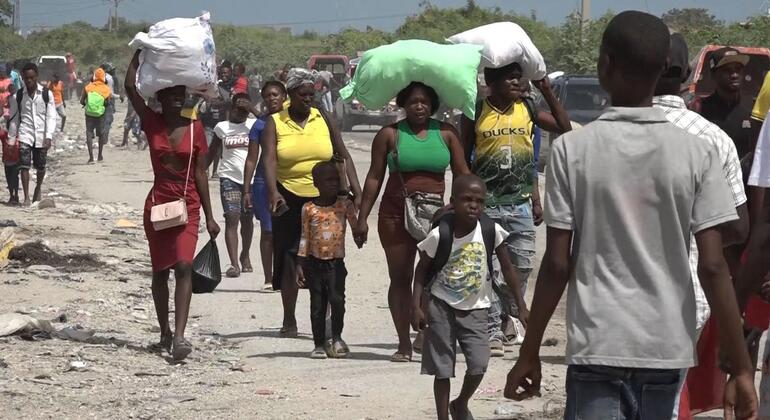

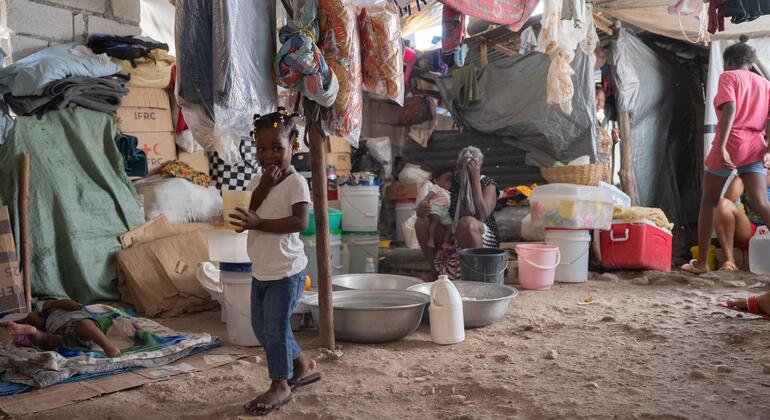
United Nations Representative Vanessa Frazier has issued a stark warning following her initial field visit to Haiti, stating that children in gang-controlled areas are suffering the most severe consequences of the ongoing violence. Frazier highlighted a deeply concerning statistic: approximately half of all gang members in Haiti are children, underscoring the severity of the humanitarian crisis gripping the nation.
Children Caught in Crossfire of Unprecedented Violence
Frazier described the level of violence inflicted upon children in Haiti as unacceptable, detailing how they face daily struggles for survival, live in constant fear, and are vulnerable to exploitation by gangs. The recruitment and use of children by gangs have reportedly tripled by 2025. This alarming trend is accompanied by an increase in killings, mutilations, and kidnappings of children. Furthermore, sexual violence is being deliberately employed as a tactic to instill fear and punish communities.
Prioritizing Children as Victims, Not Perpetrators
While acknowledging the efforts of the Haitian government and its partners to prioritize child protection, Frazier noted the signing of a handover protocol with the UN in 2024, which aims to facilitate the transfer of children associated with gangs to child protection services. She emphasized that children encountered during security operations must be treated primarily as victims, requiring immediate referral to child protection services for care, protection, and reintegration. However, Frazier cautioned that this principle is not always upheld and urged for consistent application.
During her visit, Frazier observed 80 children held for years in ‘deplorable conditions without trial’ at the CERMICOL detention center in Port-au-Prince. She reported that none of these children had ever appeared before a judge, and family visits were scarce.
A Critical Window to Address Broader Humanitarian Crisis
Frazier called on authorities to end the mistreatment of detained children and release them in accordance with the handover protocol before the anticipated deployment of the Gang Suppression Force (GSF) on June 1. She stressed that the GSF’s deployment presents a crucial window of opportunity to do the right thing, asserting that security and child protection are inextricably linked.
Long-term efforts to reintegrate children are being scaled up in the capital, Port-au-Prince, and Les Cayes, where a facility is being renovated to accommodate up to 600 children leaving gangs. The scale of the crisis is further evidenced by the destruction, damage, or functional impairment of 1,600 schools due to gang activity, which isolates children and increases their risk of recruitment, abuse, and exploitation. The increasing use of schools and hospitals for military purposes has severely degraded the protective environment for children.
Resilience Amidst Despair: A Glimmer of Hope
Despite facing a relentless cycle of violence both at home and in public, Frazier reported that the vast majority of children she met remain hopeful. Their most profound desire is to attend school, play, learn, and simply be children again. Frazier concluded by highlighting the extraordinary resilience of Haitian children, who demonstrate a spirit that deserves more than mere survival, even in the darkest of times.