
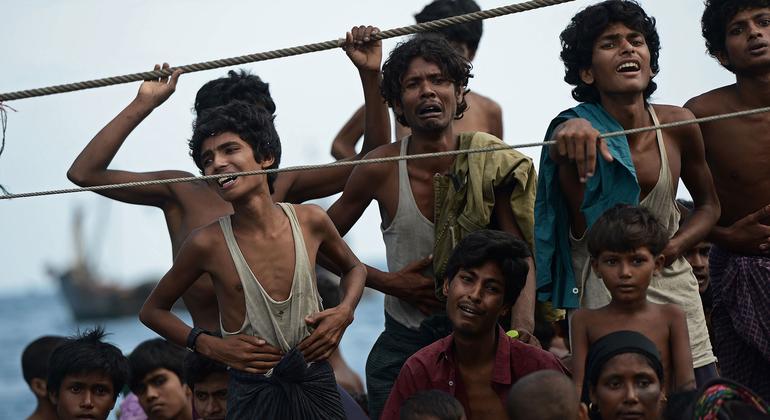
The United Nations High Commissioner for Refugees (UNHCR) estimates that approximately 5,000 Rohingya refugees have perished at sea over the past decade. “This situation, tragically, turns the Andaman Sea and the Bay of Bengal into a unmarked graveyard for thousands of desperate Rohingya refugees,” stated UNHCR spokesperson Babar Baloch in Geneva.
Since 2012, around 200,000 Rohingya refugees have risked their lives on perilous sea journeys to escape destitution and persecution. In 2017, hundreds of thousands of Rohingya fled Myanmar to Bangladesh amidst atrocities described by then UN human rights chief Zeid Ra‘ad al-Hussein as “a textbook example of ethnic cleansing.”
Earlier this week, UNHCR reported hundreds of Rohingya missing and presumed drowned following a boat accident on April 8 in the Andaman Sea, off the coast of Bangladesh, which hosts the majority of the persecuted minority.
Return to Myanmar Remains Unsafe
Baloch emphasized, “While most Rohingya refugees wish to return to Myanmar when conditions allow for a voluntary, dignified, and safe return, ongoing conflict, persecution, and the absence of citizenship prospects leave them with little hope.”
He added, “Nobody would put their family on a risky boat if the chance of survival was truly low; if there isn’t a sense of desperation. Without hope, we fear more lives could be lost.”
With no end in sight to these deadly sea crossings, UNHCR hopes the world will “recognize what the Rohingya are enduring inside Myanmar, in refugee camps, and in the wider region, and take action to find solutions for desperate Rohingya refugees, so that 2026 does not become another deadly year,” highlighting the record death toll.