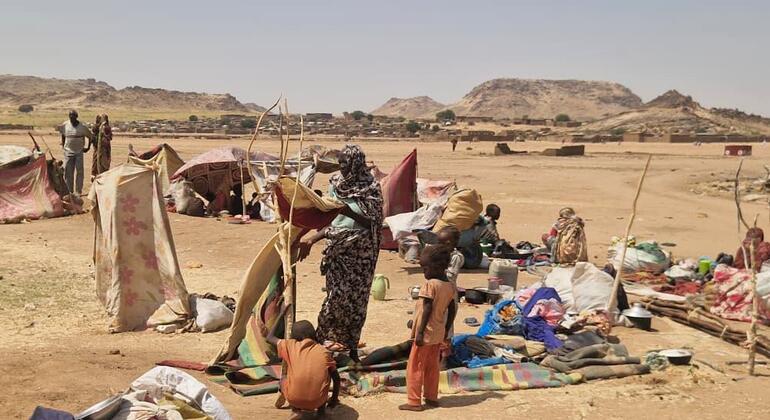

The ongoing conflict in Sudan, primarily between the Sudanese Armed Forces (SAF) and the Rapid Support Forces (RSF) along with allied groups, is intensifying pressure on the war-torn civilian population. The violence has evolved into a pervasive system of repression affecting nearly every aspect of civilian life, with civilians bearing the brunt of the conflict, according to Mohamed Chande Othman, Chair of the Independent International Fact-Finding Mission on Sudan. This repression manifests in dangerous movements and arbitrary detentions.
‘Dangerous’ Movements and Arbitrary Detentions
For Sudanese families, even relocating has become a perilous act. The Mission has documented instances where civilians are stopped at checkpoints, accused of supporting the opposing side, and detained without due legal process. Individuals attempting to move between different regions report facing arrest, abuse, and enforced disappearances. Journalists, humanitarian aid workers, traders, community leaders, and ordinary civilians seeking safer areas are all affected. As expert member Joy Ngozi Ezeilo stated, civilians are increasingly pressured to pledge allegiance to one of the warring parties for their safety, freedom, and economic survival.
Detentions and Ransom Demand Deepen Family Crises
Grave abuses linked to arbitrary arrests are exacerbating Sudan’s humanitarian crisis. The Mission has recorded cases where families are demanded to pay substantial sums for the release of detained relatives. In some instances, demands have reached approximately $40,000, an impossible sum for households already struggling with conflict, displacement, and collapsing livelihoods. Such practices also disrupt fragile local economies. In areas like El Fasher, El Obeid, Dilling, and Kadugli, increased risks of detention and abduction for traders crossing front lines reduce food access and worsen insecurity for already struggling communities.
Disappearance of Aid Workers Raises Alarms
The Mission expressed deep concern over reports from El Geneina in May 2026, where at least 70 people, including humanitarian aid workers, were detained and have not been heard from since. Enforced disappearances have consequences beyond the affected individuals. Expert member Mona Rishmawi emphasized, “No family should be left in silence and uncertainty searching for their loved ones.” Attacks on humanitarian aid workers undermine relief operations, placing entire communities at greater risk as vital assistance is disrupted.
Detention Conditions Pose Life-Threatening Risks
Conditions within detention facilities controlled by both sides remain extremely concerning, according to the Mission. Detainees are held in overcrowded cells, facing malnutrition and water scarcity, poor sanitation, and limited medical care. Outbreaks of diseases, such as cholera, have been reported in some facilities. Former detainees have described beatings, electric shocks, sexual violence, and prolonged solitary confinement. It is believed that thousands are held in inhumane conditions in facilities like Nyala Prison in South Darfur. The lack of independent access to detention centers makes it difficult for families to obtain information, fueling fears of disappearances and deaths in custody.
Call for Accountability
The Mission urged all parties to immediately cease arbitrary arrests and detentions, release those held without legal basis, and disclose the whereabouts of detainees. It also called for renewed international efforts to ensure independent access to detention facilities and accountability. Researchers warned that without action, these forms of abuse could become further entrenched, forcing Sudanese civilians to endure a conflict where fear, uncertainty, and separation increasingly define daily life. The members of the Independent International Fact-Finding Mission on Sudan are appointed by the UN Human Rights Council and receive no payment for their work.