
As NASA advances its plans for a permanent lunar base, the agency emphasizes the importance of durability, efficiency, and autonomy in robotic systems. The 2026 NASA Lunabotics Competition brought together university engineering students from across the nation at the Kennedy Space Center Visitor Complex in Florida to showcase these critical qualities. The event highlighted advanced robotic technologies and systems engineering expertise aimed at building and sustaining long-term lunar infrastructure.
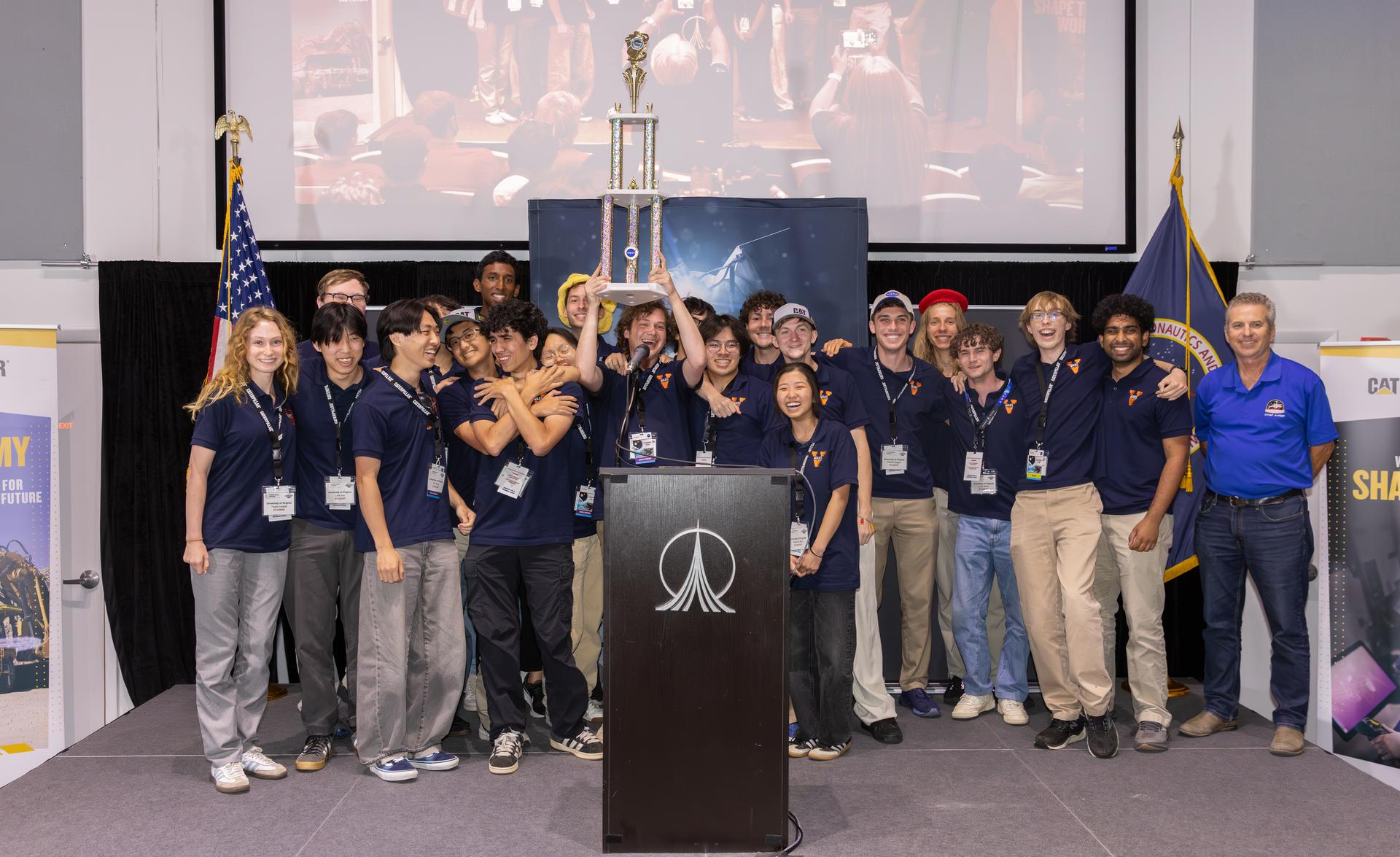
The University of Virginia team clinched the “Off World Grand Prize” for achieving the highest overall score by successfully completing all event challenges. Robert Mueller, a senior technologist at NASA Kennedy and lead judge, stated that the award encompasses “everything,” underscoring the significance of the entire system’s performance in a real lunar mission rather than just individual components.
NASA’s annual Lunabotics Competition spans two academic semesters, during which university students design, build, and test lunar construction robots using NASA’s systems engineering principles. The 2026 competition, which commenced in September, saw teams submit industrial plans, engineering reports, and robot specifications. Forty-seven selected teams conducted their initial tests at the University of Central Florida’s Exolith Laboratory in Orlando.
During the qualification rounds, teams focused on excavating and transporting simulated lunar regolith to construct a berm in challenging terrain. Performance was evaluated against various criteria, with the top 10 teams earning a spot in the three-day finals held at NASA Kennedy from May 19-21.
Judges assessed numerous factors beyond just the berm’s size, including robot weight, communication performance, power consumption, and autonomy levels. These assessments were categorized into four main areas: Science, Technology, Engineering, and Mathematics (STEM) industrial plan, systems engineering paper, presentations and demonstrations, and robotic construction.
The University of Virginia team distinguished itself through its preparation and resilience, in addition to measurable metrics. When their robot lost a wheel during its initial run in the finals, the team ingeniously reconfigured it to operate on three wheels, enabling them to continue the excavation. Craig Kalkwarf, a fourth-year student in aerospace engineering and astronomy and the team’s mechanical lead, recounted how initial despair turned into a winning effort due to their preparedness and quick replacement of the metal wheel.
A crucial aspect of the Lunabotics Competition is the students’ application of NASA’s Systems Engineering Process, which integrates hardware, software, people, and procedures. Judges noted that the systems engineering skills demonstrated this year were the strongest in the competition’s 17-year history. Teams exhibited remarkable adaptability when faced with obstacles, such as robots getting stuck on uneven terrain or damaged excavator blades, yet still managed to build impressive berms.
The competition revealed that students built upon previous robot designs, with a notable increase in fully autonomous robots—from 12 last year to 27 this year. This advancement led to more competitive and efficient races within the “Artemis Arena,” a facility filled with lunar regolith simulant to mimic the loose, uneven terrain robots will encounter on the Moon.
Rich Johanboeke, the competition project manager, observed that teams extracted more material than anticipated, showcasing their improved design iterations and increased innovation.
Following the success of NASA’s Artemis II mission, the Lunabotics Competition highlights the subsequent steps toward establishing a sustainable human presence on the Moon. Autonomous robots capable of shaping lunar regolith into berms will play a vital role in protecting landing sites, supporting power systems, and forming the building blocks for future lunar bases.
Mueller remarked, “This might be the first thing NASA does on the Moon, using a local resource, lunar regolith, robotically to build a berm.” He added that insights from these teams are informing the “Infrastructure Pilot Excavator” (IPEx) mission, scheduled for launch in a few years. Developed at Kennedy’s Swamp Works, IPEx is designed to perform excavation and transport functions on the lunar surface.
This year’s Lunabotics Competition not only celebrated student ingenuity but also advanced the technologies and engineering approaches that will define the next era of lunar exploration. Lunabotics provides an immersive engineering experience reflecting industry-level problem-solving for students, while also assisting NASA in finding innovative solutions to the agency’s technical challenges and recruiting the next generation of engineers, technologists, and innovators.
Andrew Ebert, a mechanical engineering student from the College of DuPage who built the largest berm and received an award, stated that working at NASA is everyone’s dream and represents the coolest engineering job, pushing the boundaries of humanity.
The creativity, resilience, and technical mastery displayed by these teams directly shape NASA’s progress toward establishing a sustainable lunar base. The experience and expertise gained by these young engineers through Lunabotics will become even more significant when construction begins on the Moon in the coming years.
Mueller commented, “These students might be working at NASA when we start building on the Moon.”
Award Winners:
- Off World Grand Prize – Overall Excellence: University of Virginia
- Lunabotics Construction Award: 1. College of DuPage, 2. University of Virginia, 3. Michigan Technological University
- Caterpillar Autonomy Award: 1. The University of Alabama in Huntsville, 2. University of Virginia, 3. University of Utah, 4. Purdue University, 5. Iowa State University, 6. College of DuPage
- Lunabotics Efficient Use of Communications Power Award: Iowa State University
- Systems Engineering Paper: 1. The University of Alabama, 2. University of Virginia, 3. University of Illinois in Chicago
- Nova Award for Stellar Systems Engineering by a First Year School: Laredo College, Northwestern University
- Systems Engineering Leaps & Bounds Award: Virginia State University
- Rocket Award for Accelerating Systems Engineering Mastery: University of Illinois in Urbana-Champaign
- Presentations and Demonstrations: 1. New Mexico Institute of Mining and Technology, 2. The University of Alabama, 3. Colorado School of Mines (Honorable Mention: Michigan Technological University)
- Presentations and Demonstrations First Steps Awards: Carnegie Mellon University